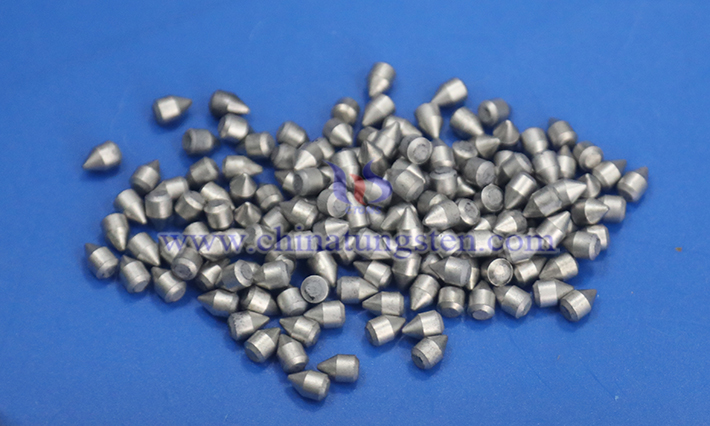
Tungsten carbide safety hammer heads produced and designed by CTIA GROUP, with their high hardness, wear resistance, and impact strength, have become an important component of emergency window-breaking tools. However, in practical use, their performance may be affected by factors such as material characteristics, operating environment, usage methods, and maintenance conditions, leading to a series of issues. What are the common problems encountered when using tungsten carbide safety hammer heads?
CTIA GROUP and its parent company, CHINATUNGSTEN ONLINE, have been dedicated to the tungsten-molybdenum products industry for nearly 30 years. They specialize in providing flexible, customized global services for tungsten-molybdenum products, designing, manufacturing, and precisely processing various standard specifications, grades, and dimensional precision according to customer requirements, suitable for a wide range of applications. For more information on tungsten carbide, please visit the website: http://www.tungsten-carbide.com.cn/index.html. If you require tungsten carbide, please contact CTIA GROUP: sales@chinatungsten.com, 0592-5129595.
1.Tip wear and deformation of tungsten carbide safety hammer heads
When tungsten carbide safety hammer heads are repeatedly used on tempered or laminated glass over a long period, the tip is prone to wear and blunting. Although the hardness of tungsten carbide is much higher than that of ordinary steel, the rounded or conical portions of the tip gradually flatten under repeated impacts, causing the impact force to become less concentrated. This wear reduces glass-breaking efficiency, particularly in public transportation or high-frequency industrial usage scenarios. If the tip is severely worn, the time required to break glass increases, which may affect emergency evacuation or equipment repair efficiency.
2.Tip chipping of tungsten carbide safety hammer heads
During use, if the hardness of the hammer tip does not match that of the material being struck, or if the impact angle is significantly off, microcracks can accumulate at the tip, eventually leading to chipping or partial detachment. This phenomenon is especially common in high-intensity scenarios such as industrial auxiliary glass breaking, metal specimen impact testing, and stone processing. Once the tip chips, the hammer cannot perform its breaking function properly and may even cause secondary injuries, posing a safety risk to the user.
3.Loosening of the connection between the hammer head and handle
Most tungsten carbide safety hammers are either integral or composite in structure, with the hammer head fixed to the handle mechanically or with adhesive. Long-term use or frequent vibration may cause the connection between the hammer head and handle to loosen, or even detach during impact, affecting hitting stability and safety. This connection issue is particularly pronounced in vehicles or ships subject to strong vibrations, potentially rendering the emergency tool unusable and increasing the difficulty of escape or maintenance.
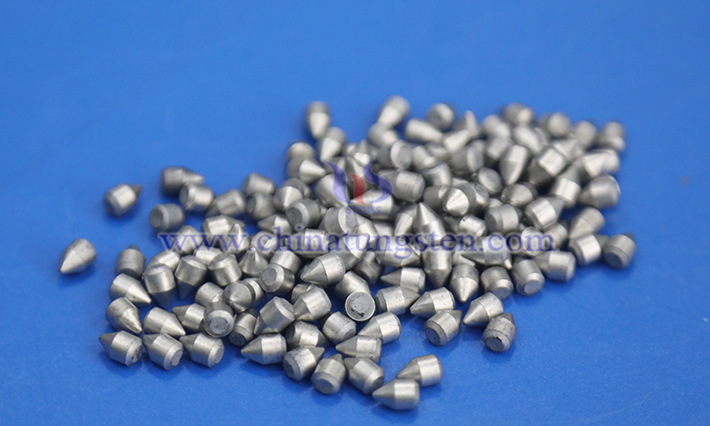
4.Cracks or fractures in the tungsten carbide hammer head itself
Under instantaneous impact loads, tungsten carbide may develop fine cracks if its bending strength is insufficient or if internal material defects exist. As these cracks propagate, the hammer head may fracture. This issue is more likely to occur in stone processing, industrial testing, and high-frequency glass-breaking operations. Hammer head fractures not only reduce tool reliability but may also injure the operator.
To maximize the service life of tungsten carbide safety hammer heads and ensure emergency effectiveness, the following measures should be taken:
?Proper selection: Choose the appropriate grade based on the usage scenario. For standard public transportation or building demolition scenarios, the YG8 grade is recommended, as it balances hardness and toughness.
?Regular inspection: Before use, check the hammer tip for wear or deformation, and examine the surface for cracks, chipping, or corrosion. Ensure the connection with the handle is tight and secure.
?Standardized operation: Avoid repeated dry strikes, excessive force, or hitting non-glass materials. Maintain the correct impact angle to reduce abnormal stress concentration at the tip.
?Timely replacement: Replace the hammer head immediately if severe tip wear, crack propagation, or loose connections are detected to avoid failure during critical moments.