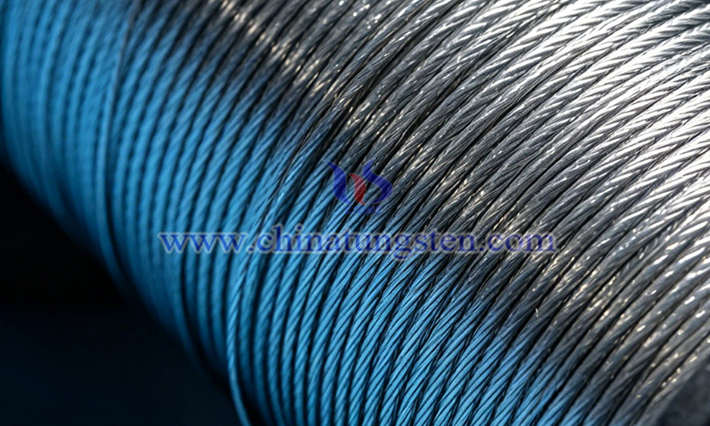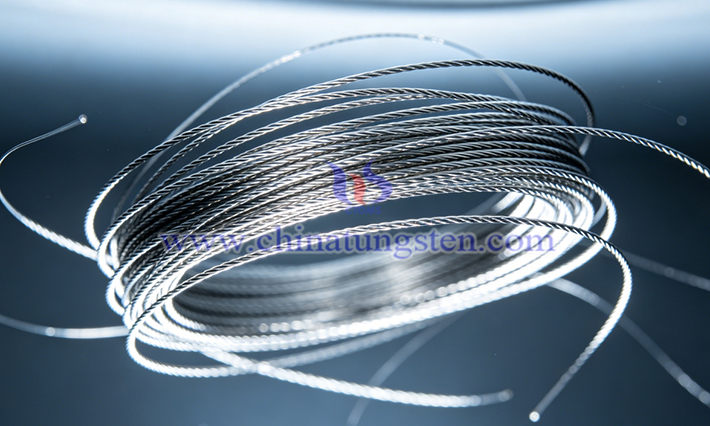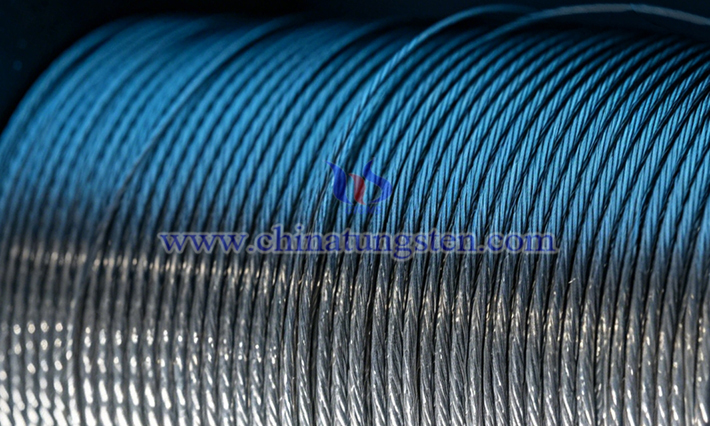
The essence of using tungsten wire tendon ropes to drive robot joints is to convert the rotational motion of a motor into linear motion, and then transmit the power to the distal joint via flexible ropes, simulating the movement of human tendons pulling on bones. This method, known as "tendon rope drive," is currently the mainstream choice for dexterous hands in humanoid robots and a core technological path for achieving multi-degree-of-freedom, high-precision humanoid manipulation.
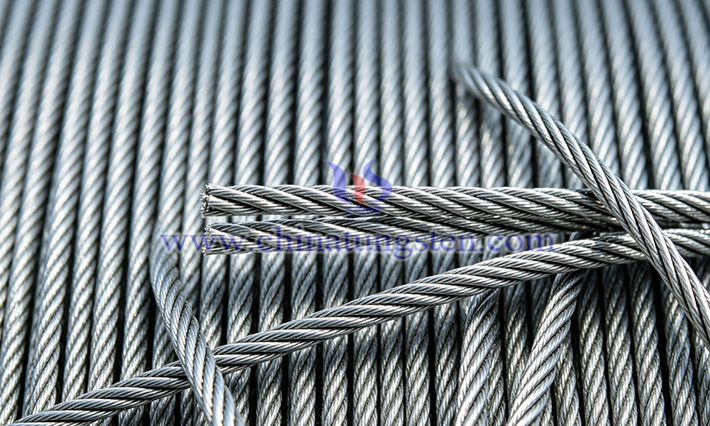
I. Working Principle of Tungsten Wire Tendon Ropes
Tungsten wire tendon ropes drive robot joints through a precision transmission chain of "motor-gearbox-ball screw-nut-tendon rope-joint." Its core components include three steps: power generation and conversion, tendon rope traction, and joint execution. First, the motor, as the power source, generates rotational motion, providing the initial power to the drive system. To meet the torque requirements of the joint drive, the motor's rotation is first reduced in speed and increased in torque by the gearbox, adjusting the high-speed, low-torque rotation to a low-speed, high-torque output. Subsequently, the ball screw converts the decelerated rotational motion into the linear motion of the nut, thus achieving a fundamental transformation in the form of motion.
In the power transmission stage, the tendon cord forms a closed tendon loop on the nut. When the nut moves linearly along the screw, it pulls the tendon cord looped around it, transmitting the traction force of the linear motion to the tendon cord itself. The other end of this pulled tendon cord is connected to the phalanx or joint of the robot's finger, acting as a flexible bridge between the power source and the end effector. In the final joint execution stage, the tension of the tendon cord drives the finger to rotate around the joint axis, completing predetermined actions such as grasping and holding. By combining different combinations of pulling or releasing tendon cords, precise coordinated control of single or multiple joints can be achieved, thereby simulating the complex movement patterns of the human hand.
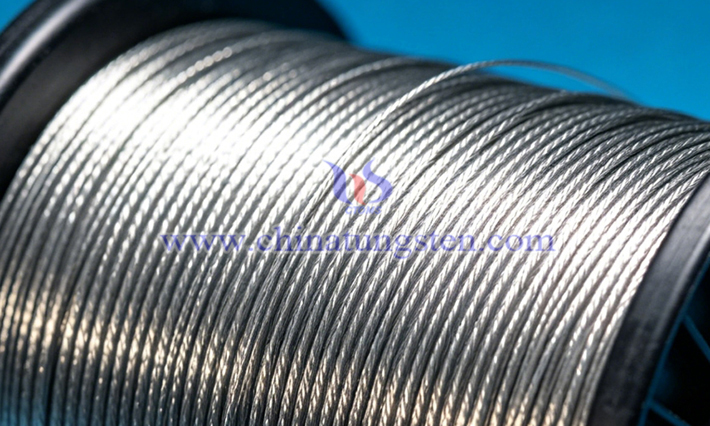
II. Why Use Tendon Cord Drive?
The reason why tendon cord drive is widely used in the field of humanoid robots is mainly due to its multiple advantages at the system design level. First, high dynamic response is the most prominent feature of tendon cord drive. By concentrating the larger and heavier actuators in areas far from the actuation end, the load and inertia of the fingers are significantly reduced, improving the response speed and flexibility of movements, enabling the robot to perform more agile and precise operations.
Secondly, chord drive exhibits extremely high design flexibility in terms of structural layout. The inherent flexibility of the chords allows the transmission path to be flexibly arranged according to the confined and complex space inside the robot, without being constrained by the straight lines or fixed angles of rigid links. This arrangement is particularly suitable for complex scenarios requiring the actuation of multiple degrees of freedom, such as the coordinated actuation of more than twenty joints in a dexterous hand.
Thirdly, chord drive makes it possible to achieve high-degree-of-freedom dexterity. A single chord can pass through and drive multiple joints, and the coordinated work of multiple chords makes it possible to design a highly biomimetic dexterous hand within a limited space. This transmission method not only reduces structural complexity but also effectively reduces transmission backlash, improving the overall control precision and reliability.