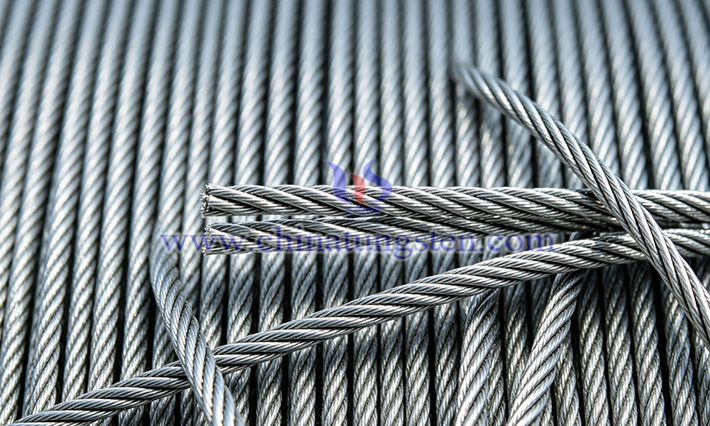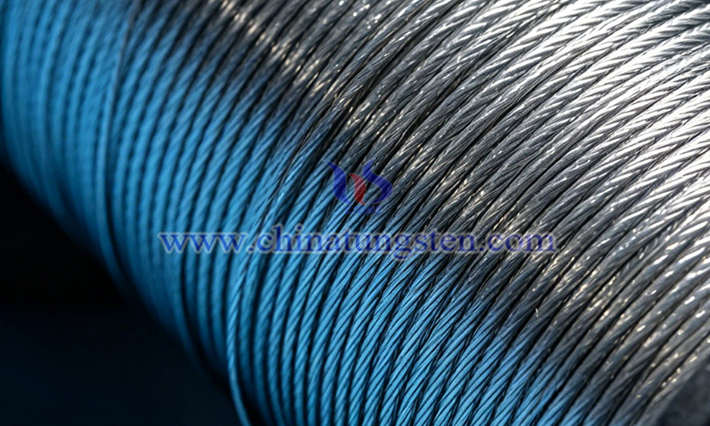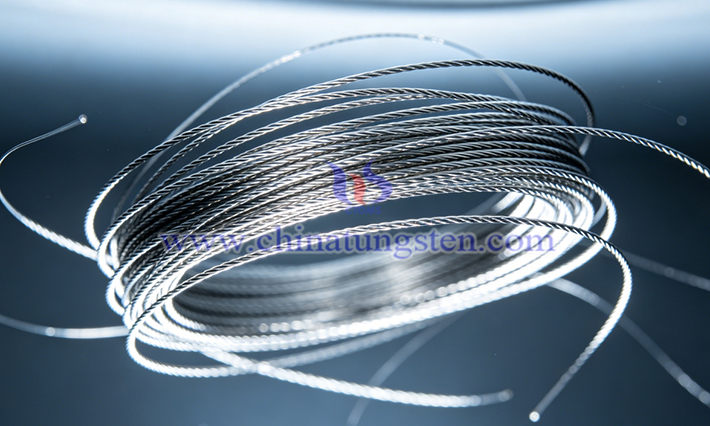
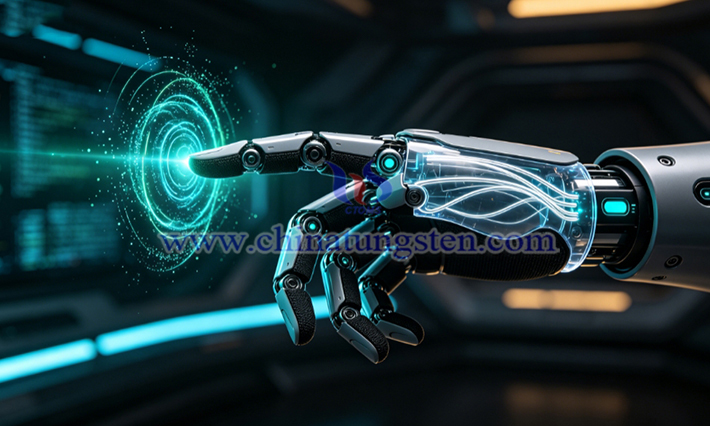
Consumer robots (C-end) refer to robot products aimed at individual and family users, encompassing categories such as humanoid robots, household robots, educational and entertainment robots, and robots for the elderly and disabled. CTIA GROUP's tungsten wire tendon ropes, with their outstanding performance in high strength, creep resistance, and extremely small bending radius, have significant application potential in the consumer robot market, especially suitable for scenarios such as dexterous hands and joint actuators in humanoid robots where high precision and reliability are required.
I. Core Requirements of Tungsten Wire Tendon Ropes for Consumer Robots
High Precision and High Reliability: Consumer robots directly face consumers and need to perform tasks such as precise grasping and gesture interaction, requiring extremely high transmission precision and motion consistency. The creep resistance of the tendon rope is a key indicator for ensuring precision.
Miniaturization Design: Consumer robots need to achieve multi-degree-of-freedom movement within limited space, requiring tendon ties with extremely small bending radii to fit into compact structures.
Durability and Long Lifespan: Consumers expect products to have a long service life, necessitating tendon ties with excellent wear and fatigue resistance.
Cost Control: The consumer market is highly price-sensitive, requiring tendon ties to be cost-effective.
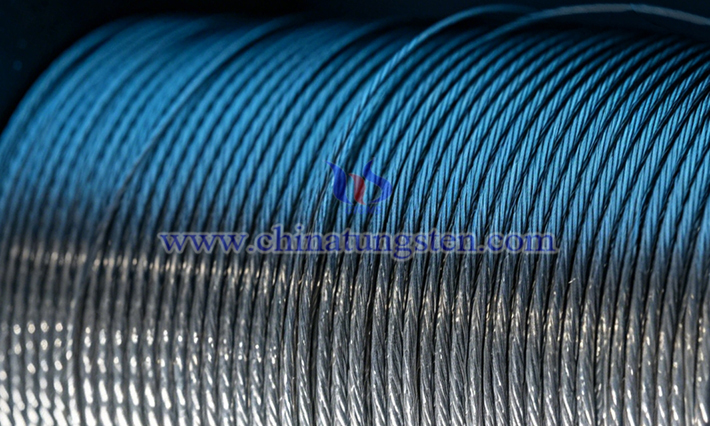
II. Advantages of Tungsten Wire Tendon Ties in Consumer Robots
Ultra-High Strength: Tungsten wire strength can reach 6,500 MPa, far exceeding the 2,600 to 3,800 MPa of ultra-high molecular weight polyethylene fiber (UHMWPE). This characteristic makes tungsten wire tendon ties more advantageous when bearing heavy loads, suitable for consumer robot scenarios requiring strong gripping or load-bearing capabilities.
Excellent Creep Resistance: Resistant to plastic deformation after long-term, repeated use, ensuring the accuracy of robot operation.
Extremely small bending radius: Tungsten wire tendons can operate with an extremely small bending radius, adapting to the compact mechanical structure design of dexterous hands and facilitating high-degree-of-freedom finger layouts.
Excellent wear and fatigue resistance: The unique molecular structure design endows it with superior wear and fatigue resistance, significantly extending the service life of transmission components.
High temperature resistance: It maintains its mechanical properties even in high-temperature environments, adapting to the thermal load requirements of continuous robot operation or complex working conditions.
III. Challenges of Tungsten Wire Tendons in Consumer Robots
Relatively limited fatigue life: As a metallic material, tungsten wire is susceptible to fatigue fracture under repeated bending. For consumer robots requiring high-frequency, long-cycle use, this fatigue life may become a bottleneck.
High cost: Tungsten wire tendons are significantly more expensive than polymer material solutions. In the price-sensitive consumer market, high cost may limit its widespread adoption.
Relatively heavy weight: Compared to lightweight materials such as ultra-high molecular weight polyethylene, metallic tungsten wire has a higher density, potentially increasing the overall weight of the robot and affecting energy efficiency and portability.
IV. Market Prospects and Growth Potential
The consumer-facing robot market is in a phase of gradual maturation and expansion. As robots expand from industrial applications to home services, healthcare, and other fields, the demand for core components such as dexterous hands will continue to grow. Some studies suggest that the Chinese market for humanoid robot tendons may grow several dozen times by 2030, with tungsten wire tendons, polymer fibers, and composite materials entering a period of rapid development.