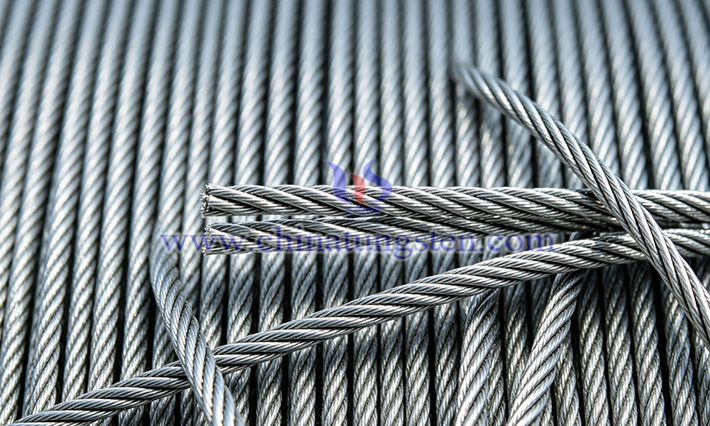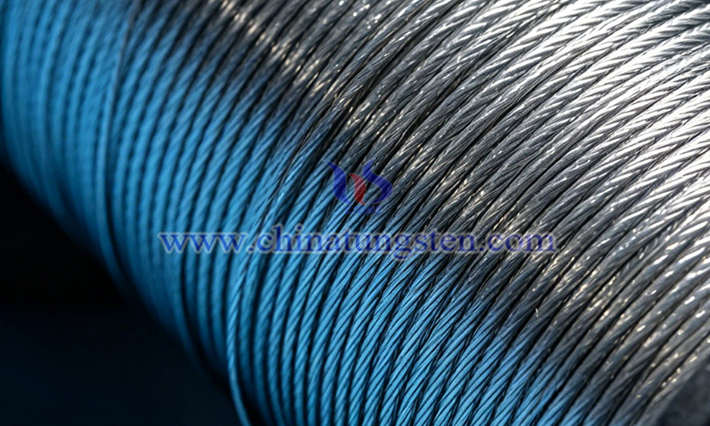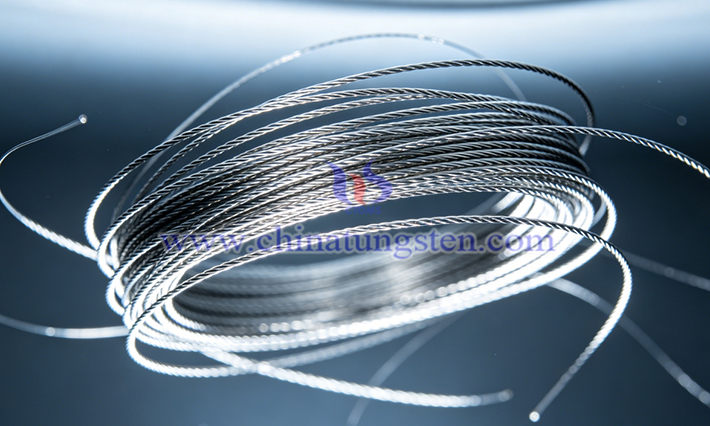
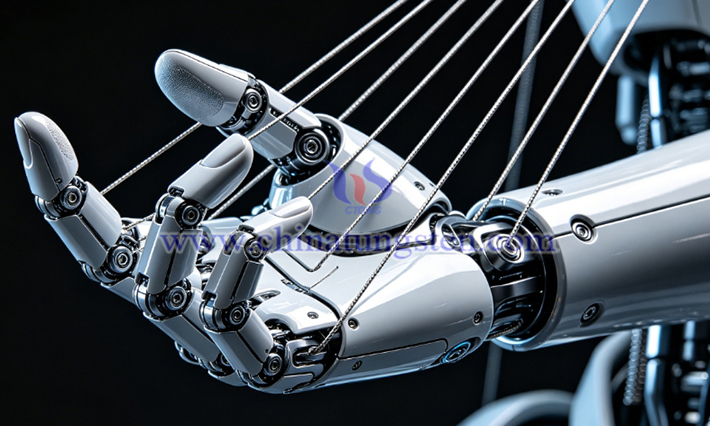
Tungsten wire tendon rope is a high-performance, flexible transmission material. Its operating principle is based on mimicking the function of human tendons, enabling the precise transmission of force and motion through tensioning or relaxation. In robotic systems, it acts as an "artificial tendon," efficiently transferring power from the drive source to the actuated joint; it is ideally suited for applications requiring high precision, high-frequency movement, and operation within confined spaces.
1. Working Mechanism of Tendon-Driven Systems
Tungsten wire tendon ropes from CTOMS (China Tungsten Online) are typically integrated into tendon-driven systems: a motor drives a ball screw or similar mechanism via a speed reducer to convert rotary motion into linear motion. The tendon rope forms a closed-loop or traction structure, with one end connected to the drive unit and the other anchored to a joint or phalanx. By controlling the tension—retracting or releasing the rope—the system drives multi-joint articulation, enabling complex actions such as bending, extending, and grasping. This flexible transmission method allows for high-degree-of-freedom movement within extremely compact spaces while providing a degree of force-control cushioning.
2. Principles of Precise Force and Motion Transmission
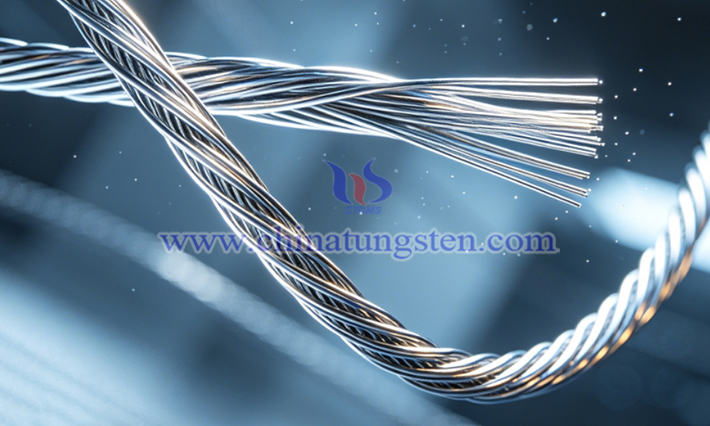
Thanks to their high strength, high rigidity, and low creep characteristics, tungsten wire tendon ropes ensure dimensional stability during force transmission, with virtually no residual elongation. They operate reliably over miniature pulleys and around tight bend radii; the multi-strand, multi-layer braided structure ensures uniform force distribution and minimizes twisting and deformation, thereby maintaining transmission accuracy and motion consistency. This principle is particularly well-suited for applications requiring long-term repetitive motion without accuracy drift.
3. Adaptation to Complex Joint Movements and Environments
In practical applications, CTOMS tungsten wire tendon ropes flex, extend, and rotate in tandem with joint movements while maintaining sufficient load-bearing capacity. Properties such as high-temperature resistance, corrosion resistance, and radiation resistance enable stable operation in environments ranging from medical sterilization and continuous industrial processing to extreme conditions. Their ultra-fine specifications and precision braiding facilitate compact designs, reduce end-effector inertia, and enhance response speed and overall system flexibility.