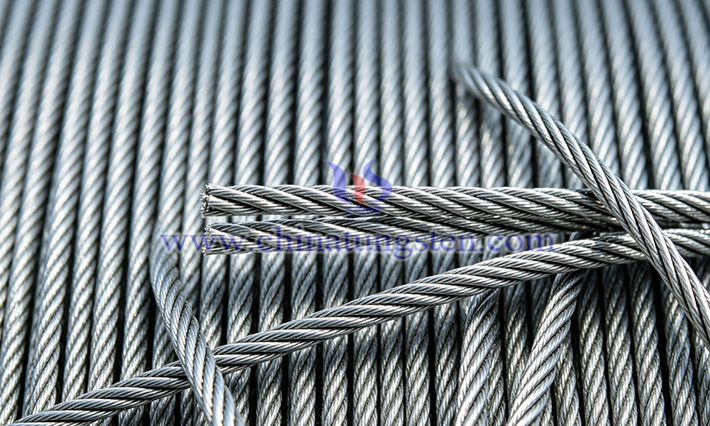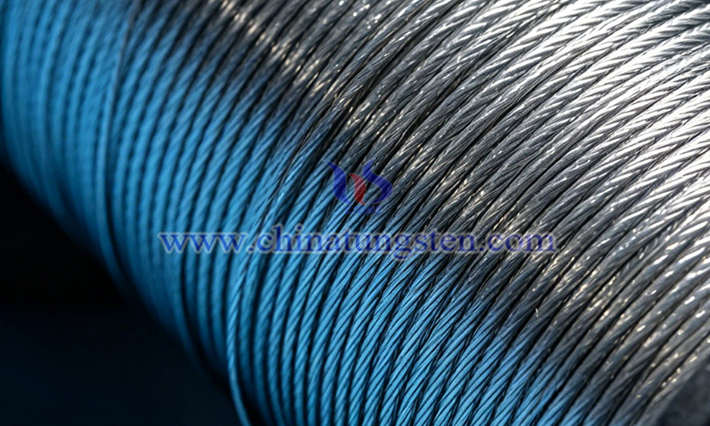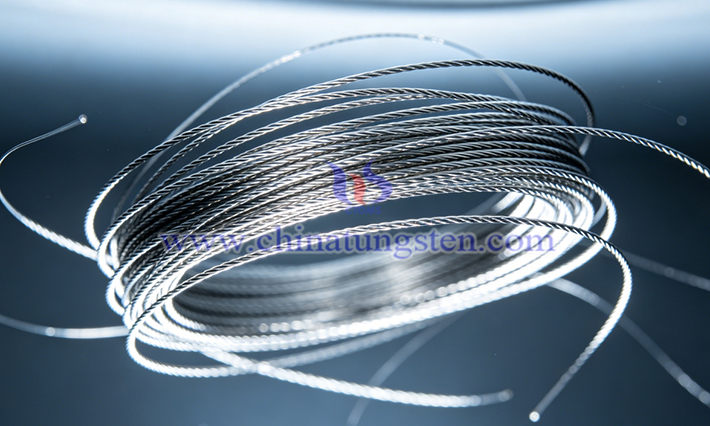
Tungsten wire tendon ropes are precision-braided from multiple strands and layers of high-purity, ultra-fine tungsten wire. They inherit the inherent mechanical properties of tungsten—such as high strength and high rigidity—while achieving an optimal balance between strength and flexibility through structural design. Suitable for high-precision, high-frequency transmission applications, they represent a reliable choice for tendon-driven systems in high-end robotics.
1. High Tensile Strength
The tensile strength of individual filaments typically ranges from 5,200 to 6,500 MPa (or higher), with the breaking strength of the finished rope varying significantly based on diameter and structure. For instance, a tungsten rope with a diameter of approximately 1 mm can withstand a breaking load exceeding 1,800 N, while finer specifications (e.g., 0.5–0.76 mm) offer breaking strengths ranging from several hundred to over a thousand Newtons—far surpassing that of standard stainless steel wire ropes.
2. High Elastic Modulus and Rigidity
With an elastic modulus of approximately 411 GPa—significantly higher than that of ordinary steel—these tendon ropes exhibit minimal deformation and high rigidity under load. This ensures effective transmission of force and motion while maintaining superior structural stability.
3. Low Creep and High Dimensional Stability
Following pre-stretching and heat treatment, the ropes exhibit extremely low residual elongation. Under long-term cyclic loading, the creep rate approaches zero, and the stress relaxation rate remains low, ensuring consistent transmission precision over extended periods.

4. Excellent Fatigue and Bending Resistance
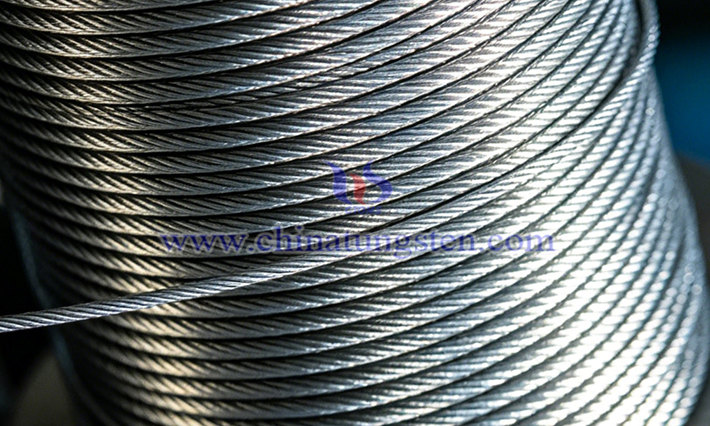
These ropes demonstrate outstanding fatigue life, even with small bending radii (e.g., R2 mm). The multi-strand braided structure ensures uniform stress distribution, significantly enhancing resistance to bending and wear. Dynamic load testing reveals minimal changes in diameter and high strength retention after repeated load cycles.
5. Other Mechanical Characteristics
Tungsten wire tendon ropes also exhibit excellent impact resistance and structural stability. By adjusting braiding density and post-processing techniques, the balance between high load capacity and flexibility can be optimized. Mechanical parameters—such as filament diameter, strand structure, and overall configuration—can be customized to meet specific transmission requirements across various applications.