The coefficient of friction is a physical quantity representing the ratio of the frictional force to the normal force when two contacting surfaces slide—or tend to slide—relative to each other. It is a dimensionless value generally categorized into the static coefficient of friction and the kinetic (or dynamic) coefficient of friction. The static coefficient of friction refers to the resistance coefficient at the moment an object transitions from rest to motion, whereas the kinetic coefficient of friction refers to the resistance coefficient during relative motion.
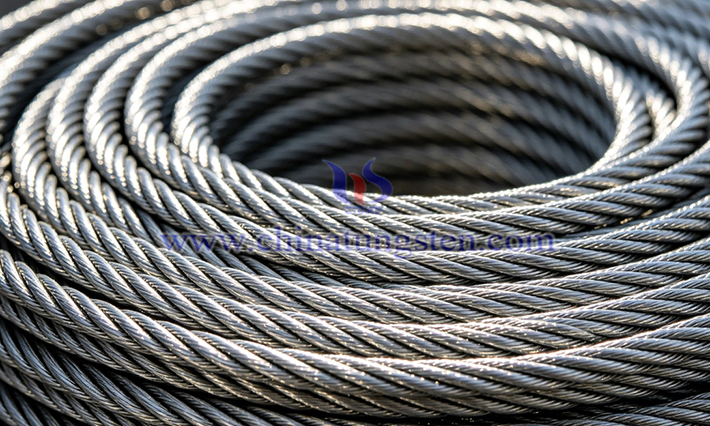
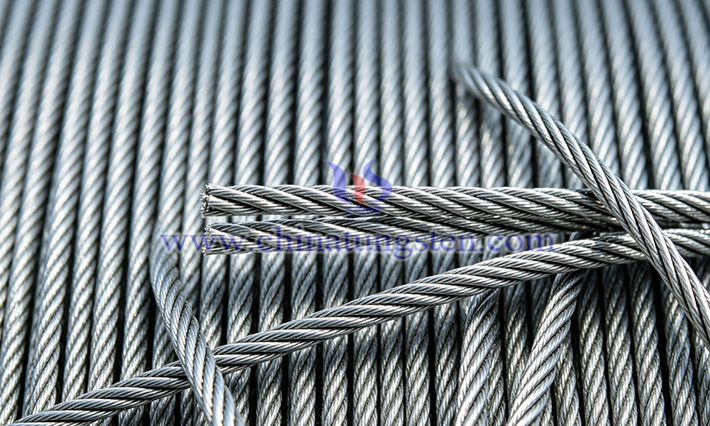
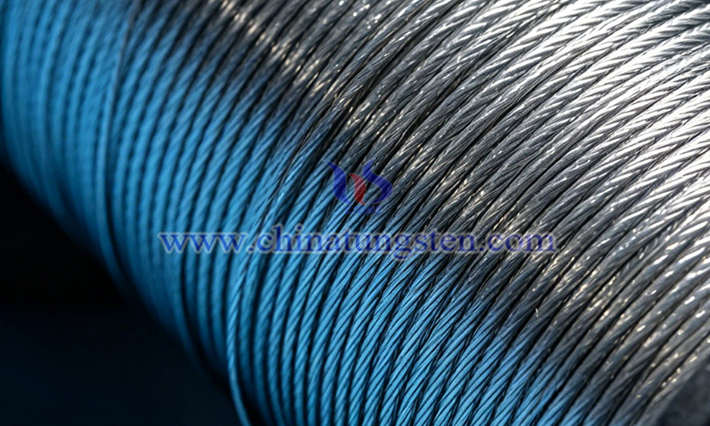
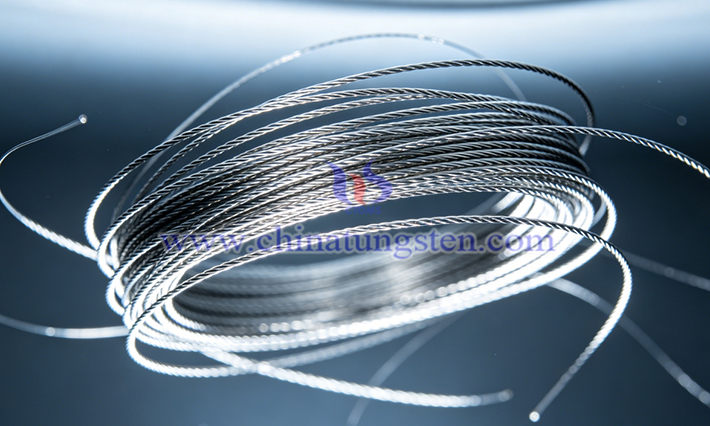
The coefficient of friction for tungsten wire tendon ropes is not a fixed value; rather, it varies within a specific range depending on operating conditions such as the mating material, lubrication, and surface state. Under dry friction conditions, the typical coefficient of friction for CTIA GROUP tungsten wire tendon ropes sliding against metal ranges from approximately 0.3 to 0.7. When the tungsten wire surface undergoes special coating treatments—such as the deposition of wear-resistant coatings like diamond-like carbon (DLC) or tungsten carbide—the coefficient of friction can be significantly reduced to between 0.1 and 0.2. If self-lubrication or minimum quantity lubrication (MQL) techniques are employed—such as applying a solid molybdenum disulfide lubricant film to the wire surface, or introducing trace amounts of lubricating oil or graphite emulsion into the system—the coefficient of friction can drop below 0.1.
The coefficient of friction of tungsten wire tendon ropes is influenced by the following key factors. First is the mating material: the coefficient is higher when tungsten wire slides against high-hardness materials like cemented carbide or ceramics, and lower when sliding against polymer materials (such as POM or PTFE) or soft metals (such as bronze). Second is the surface state: while an untreated, smooth surface has a low initial coefficient of friction, the coefficient can be actively increased in applications requiring greater gripping force through polymer coating or by increasing surface roughness; conversely, greater surface roughness results in higher frictional force during pulling operations. Finally, there are lubrication conditions: lubrication is the primary method for controlling the coefficient of friction. By adjusting conditions—ranging from initial dry friction to the application of coatings that form solid lubricant films, and further to fluid lubrication using trace amounts of oil or grease—the coefficient of friction can be systematically regulated across a wide range.

In precision industries, the coefficient of friction analyzer serves as a primary measurement tool, operating on principles derived from the Euler formula. During testing, a tungsten wire tendon is wrapped around a measuring wheel at a specific wrap angle; tensions at both the entry and exit points are measured, and the coefficient of friction is calculated using the formula. Advanced equipment is capable of measuring both static and dynamic coefficients of friction across various interfaces, such as tungsten wire against metal, ceramic, or other tungsten wires.
Uncoated tungsten wire features a smooth surface and a low baseline coefficient of friction, offering excellent initial performance characteristics. The application of hard surface coatings—such as tungsten carbide or diamond-like carbon (DLC)—not only significantly reduces the coefficient of friction but also vastly improves wear resistance and extends service life. Consequently, through advanced surface engineering and lubrication technologies, the frictional performance of tungsten wire tendons can be precisely tuned within a range of 0.1 to 0.7, meeting the rigorous demands for high efficiency, high precision, and longevity in fields requiring precision transmission, such as dexterous hands for humanoid robots and surgical instruments.