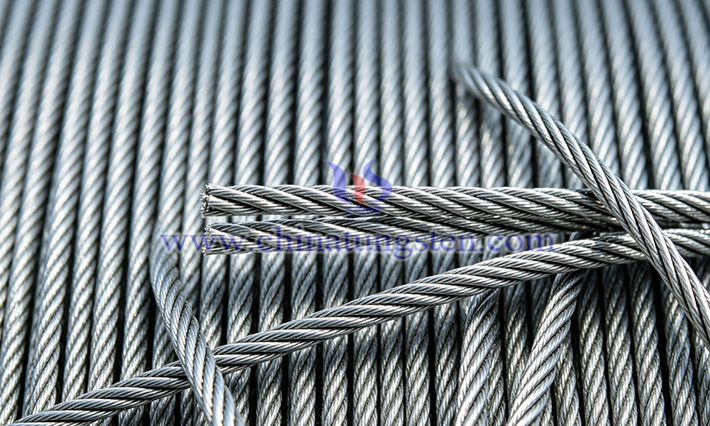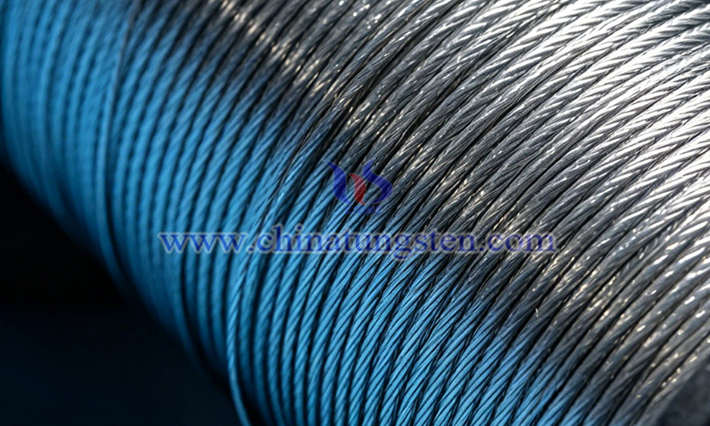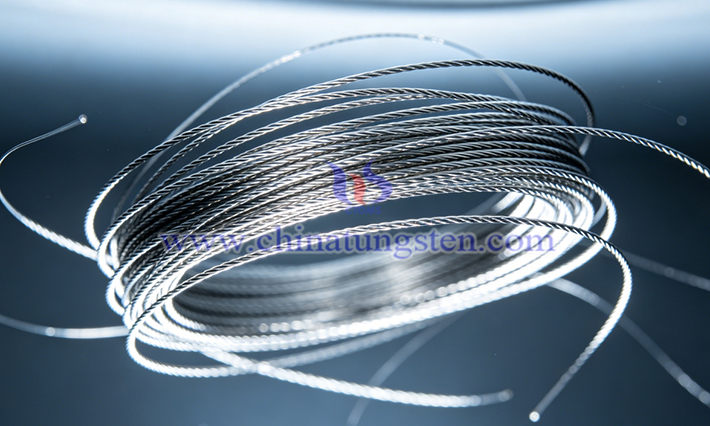
Manufacturing tungsten wire tendon ropes is a high-precision, multi-stage systematic undertaking that involves core technologies such as tungsten metallurgy, ultra-fine wire drawing, precision braiding, and post-processing. Production relies heavily on controlling material purity, modifying equipment, and optimizing process parameters. The goal is to achieve a balance of high strength, low creep, excellent flexibility, and dimensional stability to meet the demands of high-end applications, such as dexterous hands for humanoid robots. A breakdown of the typical production process follows.
1. Raw Material Preparation and Ultra-fine Tungsten Monofilament Fabrication
Production begins with high-purity tungsten powder (typically ≥99.95% purity), with some processes utilizing customized doped tungsten powder to enhance performance. The powder is first sieved and mixed (with binders added if necessary) before being pressed into tungsten compacts. These undergo pre-sintering and high-temperature sintering to form high-density tungsten rods (ingots). Subsequently, the material undergoes breakdown processing—such as rotary swaging, hammering, or forging—to gradually reduce its diameter. It then enters a multi-pass cold-drawing stage, where precision wire-drawing dies are used to reduce the tungsten wire to an ultra-fine diameter (usually 18–30 μm, or even finer). Throughout the drawing process, strict controls are maintained: diameter tolerance is kept within ±0.5 μm, surface roughness (Ra) is kept below 0.2 μm, and strength consistency deviation is kept under 3%. Intermediate annealing is performed multiple times in a hydrogen-protected atmosphere (at temperatures of approximately 800–1100°C) to relieve processing stresses and improve ductility. The entire process is conducted using precision equipment in a clean environment to prevent surface defects and wire breakage, ensuring the monofilaments possess high strength and high consistency.
2. Multi-strand, Multi-layer Precision Braiding
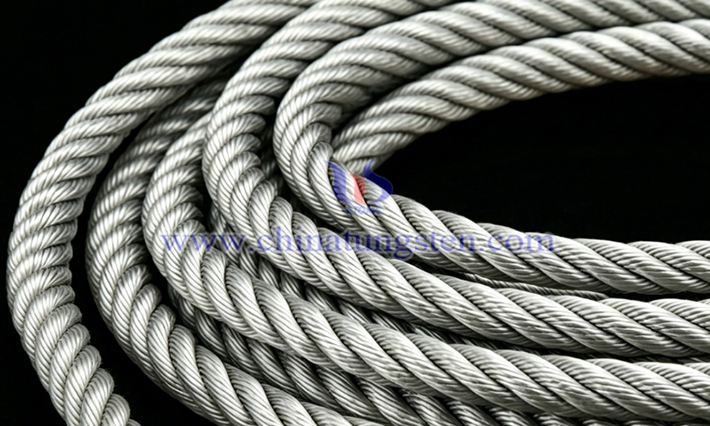
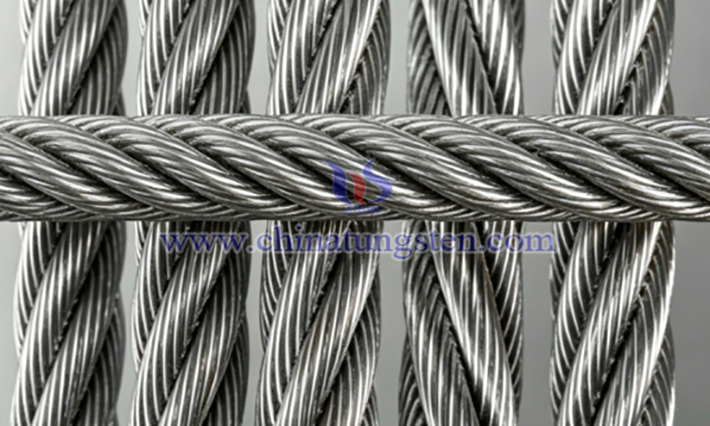
Qualified ultra-fine tungsten wires are stranded into multiple strands and braided into multiple layers according to the designed structure. Common configurations include 7×7, 7×7×7 (over 49 strands), 19×19, and 1×37; the number of strands, lay length (typically 6–8 times the rope diameter), and stranding method are customized based on factors such as pulley interaction, bending direction, and load requirements. Specialized, modified braiding equipment is employed to achieve multi-layer, counter-rotating, torque-balanced braiding. A closed-loop tension control system manages the entire process, keeping single-filament tension deviation within 1% to ensure high rope roundness (error <0.02 mm) and uniform stress distribution, thereby preventing twisting, filament popping, or strand unraveling. This stage directly determines the tendon rope's flexibility, fatigue resistance, and transmission stability.
3. Post-processing and Performance Stabilization
Following braiding, the rope undergoes multi-stage pre-stretching, where incremental loads are applied to eliminate structural stresses introduced during the braiding process. Next, a stabilization heat treatment is conducted in a vacuum environment to further relieve residual lattice stress, achieving an internal stress relief rate of over 95%. Surface optimization or polymer coating is then applied as needed to enhance wear resistance and suppleness. Finally, non-destructive crimping (e.g., using custom molds) is used for end termination, ensuring the terminal pull-out strength exceeds 90% of the rope's ultimate breaking strength while avoiding filament damage and stress concentration.
4. Quality Inspection and Packaging
Finished products undergo rigorous, end-to-end quality inspections, including incoming filament testing, in-line monitoring during braiding, breaking strength tests, fatigue life testing (verified over one million cycles), and ultrasonic flaw detection. Key performance indicators—such as residual elongation (under 0.1%), low stress relaxation rates, and dimensional stability—are strictly verified. Once approved, the ropes are packaged with moisture-proof and anti-oxidation protection to ensure performance integrity during transport and storage.