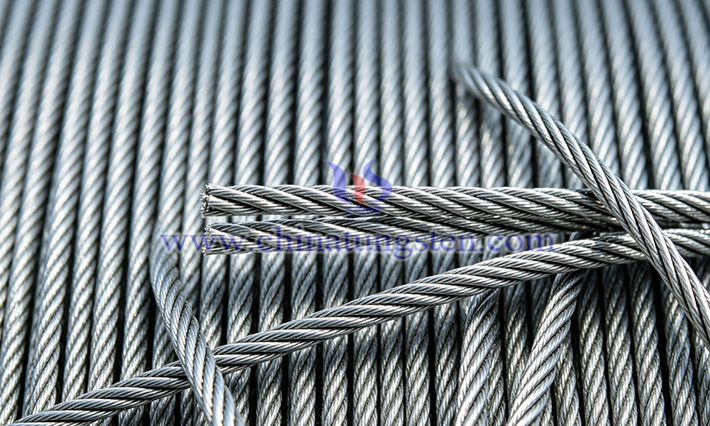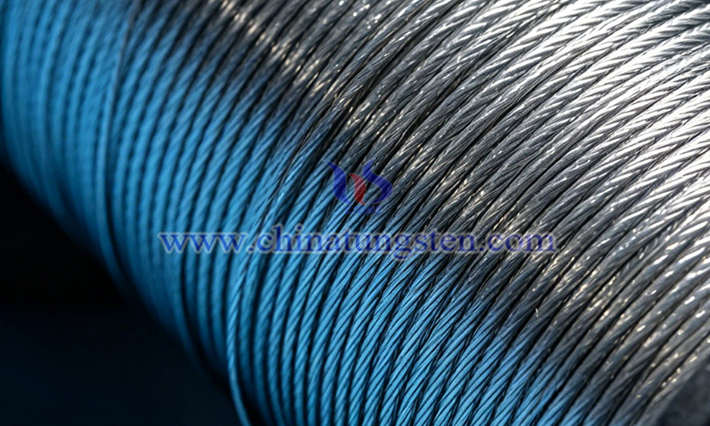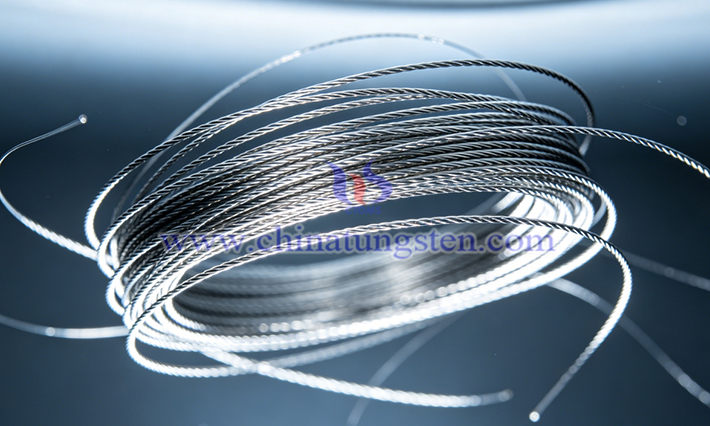
Tungsten wire tendon rope possesses excellent conductivity, enabling it to simultaneously perform mechanical transmission and electrical signal/power transmission functions. This is one of its key advantages in robotic dexterity applications.
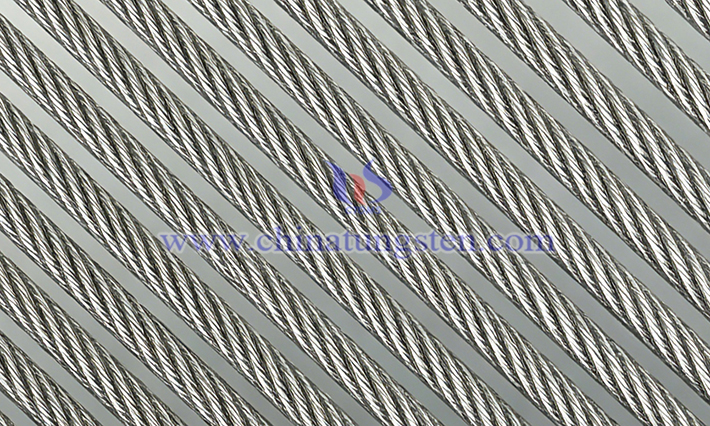
1. Fundamentals of Conductivity Tungsten, as a metallic material, exhibits excellent electrical conductivity. The resistivity of pure tungsten at room temperature is approximately 5.3-5.6 × 10?? Ω·m, which, while higher than copper, is significantly better than most alloys and non-metallic materials, and also possesses high thermal conductivity. Tungsten wire tendon rope is precisely woven from multiple strands of ultra-fine tungsten wire (typically 18–30 μm in diameter), forming a parallel conductive structure with a large effective conductive cross-sectional area, resulting in low resistance, suitable for transmitting electrical signals. Its resistivity increases with temperature, but it exhibits excellent high-temperature stability, capable of withstanding the temperature rise environments that may occur during robot operation.
2. Application Value in Robotics Tungsten wire tendon cables enable mechatronics design. Traditional tendon cables are only used for force transmission, while tungsten wire tendon cables can also serve as signal lines for transmitting electrical signals from tactile sensors, joint position feedback, etc., thereby simplifying system structure, reducing overall weight, and improving intelligence. In scenarios such as humanoid robot dexterity hands or surgical robots, tendon cables can both drive joint movement and simultaneously transmit sensory signals, effectively improving system integration and response speed. Furthermore, their good thermal conductivity helps with localized heat dissipation, reducing the impact of heat on electronic components.
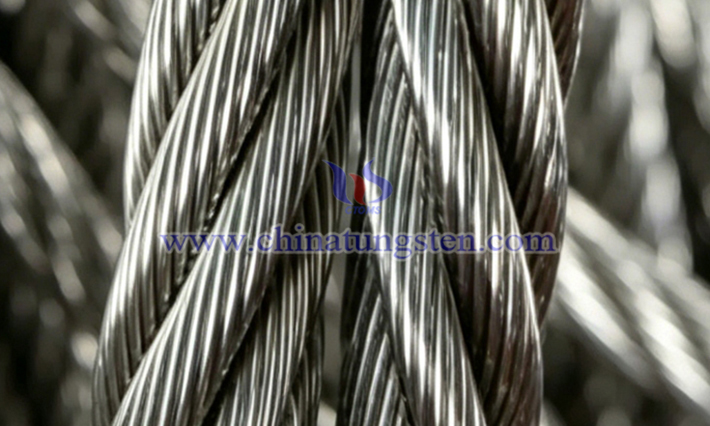
3. Precautions and Limitations Actual conductivity depends on specific specifications, including diameter, number of strands, length, and braid tightness. Resistance can be calculated using the formula R = ρ × L / A. A multi-strand parallel structure helps reduce the total resistance, but contact resistance at the crimped terminals and the surface oxide layer may have some impact. Therefore, during installation, it is necessary to ensure reliable terminal connections and avoid loosening or oxidation that could increase resistance.
Although tungsten wire tendons are highly corrosion-resistant, surface resistivity may still increase in extremely humid or chemical environments. After prolonged use at high temperatures, the material becomes more brittle, requiring special care to maintain mechanical integrity to preserve the conductive path. For transmitting large currents, it is recommended to optimize the process by paralleling with low-resistance materials such as copper wire; this is more suitable for signal transmission than main power lines. Before practical application, it is recommended to perform DC resistance, insulation performance, and signal integrity tests.