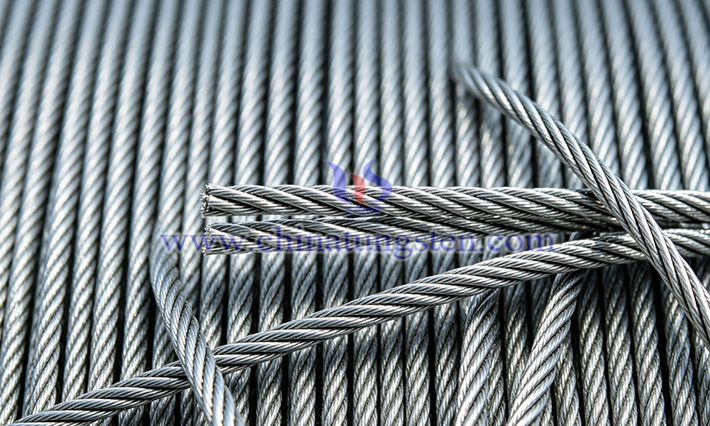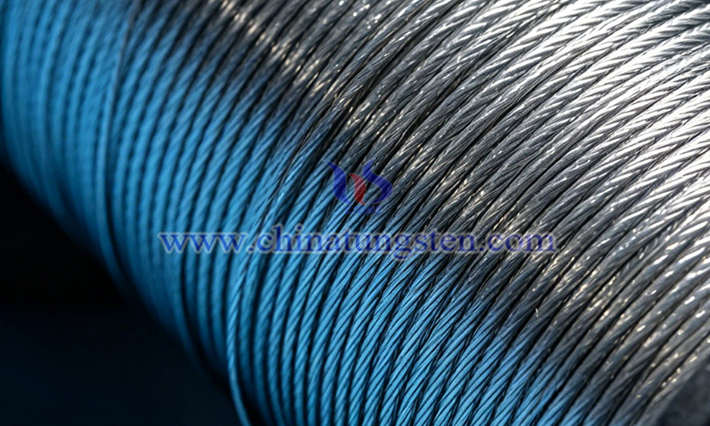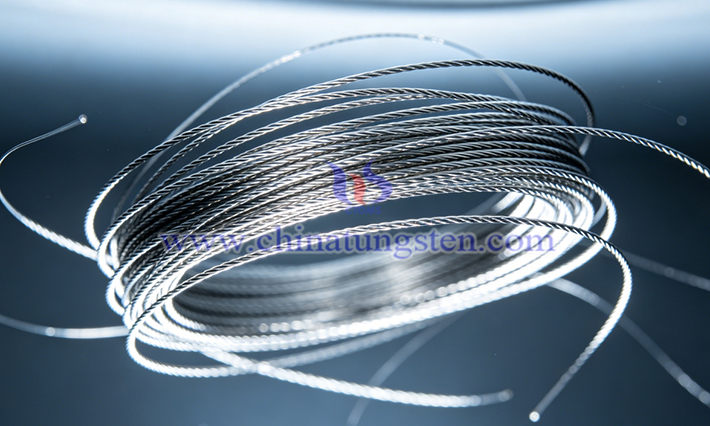
Torsional stability, or non-rotational resistance and torsional strength, is a crucial performance indicator for tungsten wire tendon ropes in precision cable-driven systems. It primarily relates to resistance to spin under load, torsional stiffness control, torsion or relaxation caused by residual internal stress, and long-term stability under repeated bending and torsional loads.
CTIA GROUP's tungsten wire tendon ropes possess excellent torsional stability and are widely used in dexterous robotic hand cable-driven systems and micro-transmission components for medical surgical robots, simultaneously meeting the requirements for high-precision torque transmission and fatigue resistance.
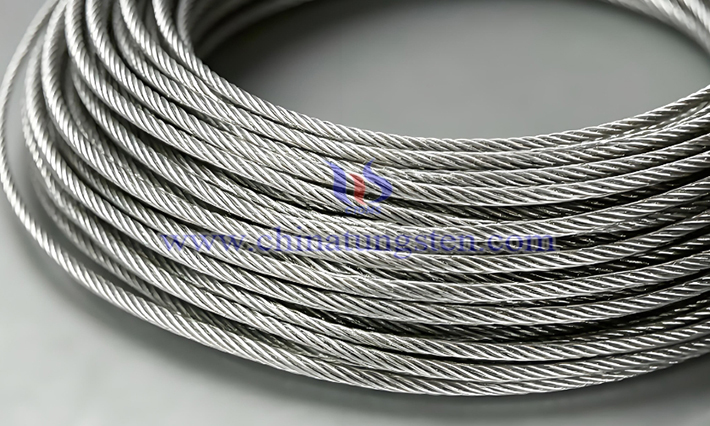
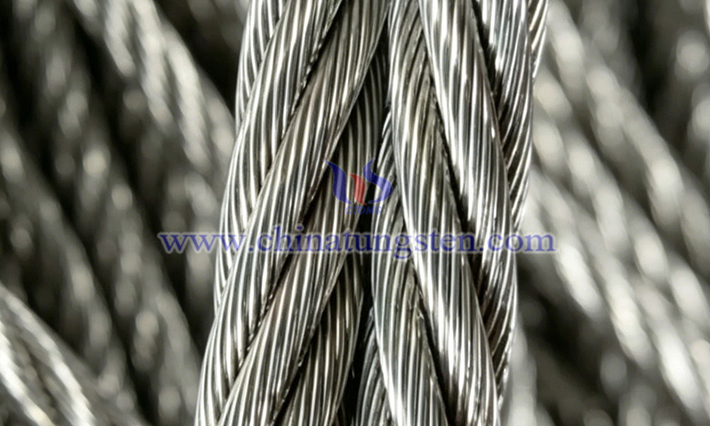
Non-rotational: High-quality tungsten wire tendon ropes employ a multi-layer reverse twisting process, such as 7×7×7, 1×37, 19×19, and higher layer structures. Optimized twist pitch (performance is best when the twist pitch to rope diameter ratio is approximately 6:1), strand twist angle (25°-35°), and precise closed-loop tension control (single filament tension deviation <1%) ensure long-term operation without strand unraveling, residual torque, or torsional drift. Ordinary structures are prone to twisting or loosening after installation due to residual torque, affecting positional accuracy.
Torsion stability enhancement measures: High-temperature hydrogen-protected annealing (800-1100℃) effectively eliminates residual stress from cold working; the multi-layer reverse twisting structure balances the torque of the inner and outer layers, significantly reducing rotational tendency.
Torsion adaptability: The multi-strand ultra-fine filament stranded structure provides excellent flexibility, adapting to multi-directional bending and certain torsional loads, while maintaining high tensile strength (single filament up to 6500MPa) and low creep characteristics.
Comparison of tungsten wire and ultra-high molecular weight polyethylene (UHMWPE): Tungsten wire exhibits higher torsional stability, minimal creep, and superior high-temperature and wear resistance; while UHMWPE, although strong, is prone to creep, and its torsional accuracy deteriorates over long-term.
Comparison of tungsten wire and stainless steel wire rope: Tungsten wire demonstrates superior resistance to bending fatigue life, and its torsional stability is outstanding under small-radius pulley conditions.