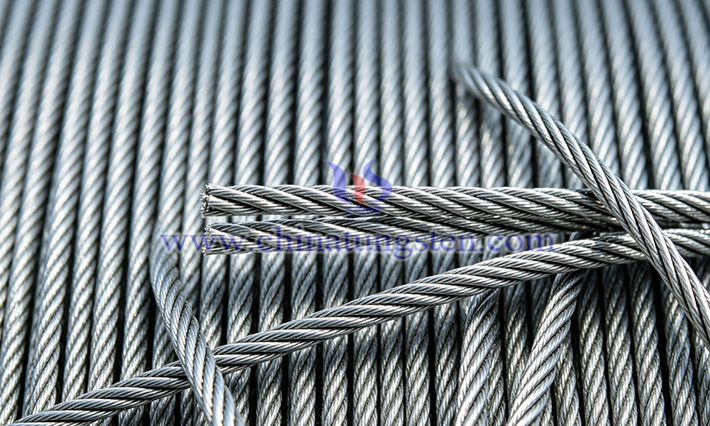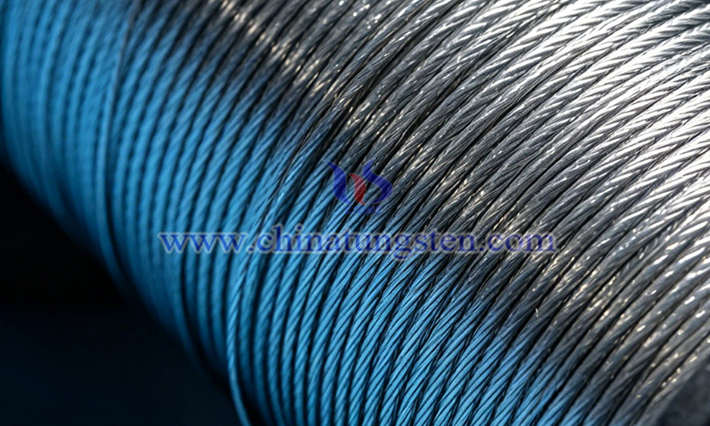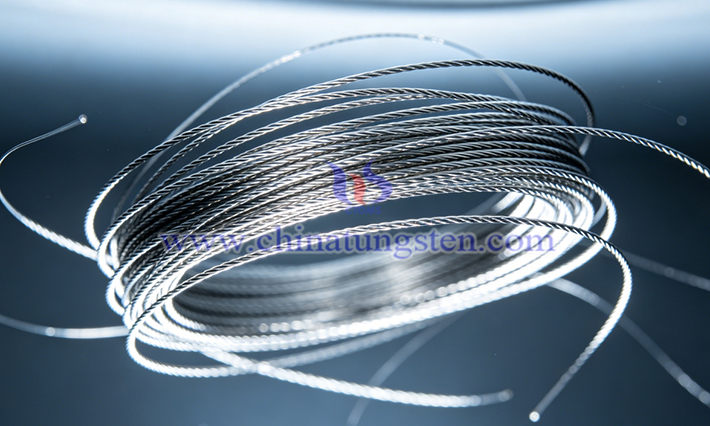
Tungsten wire tendon rope is generally made of multi-strand, multi-layered braiding of ultra-fine tungsten wires with a diameter of 18-30μm. It is mainly used in precision transmission applications such as humanoid robot dexterity hands and medical surgical robots. A large amount of internal stress is introduced during the wire drawing and braiding process. Without effective pre-stretching and shaping, problems such as elongation, slackness, and accuracy drift can easily occur during use, leading to zero-point displacement or failure of the dexterity hand joints.
The pre-stretching and shaping process for tungsten wire tendon rope mainly involves two aspects: multi-stage pre-stretching and vacuum stabilization heat treatment. The purpose is to eliminate structural stress and residual stress within the metal during the braiding or stranding process, reduce creep, and improve dimensional stability, fatigue resistance, and long-term accuracy.
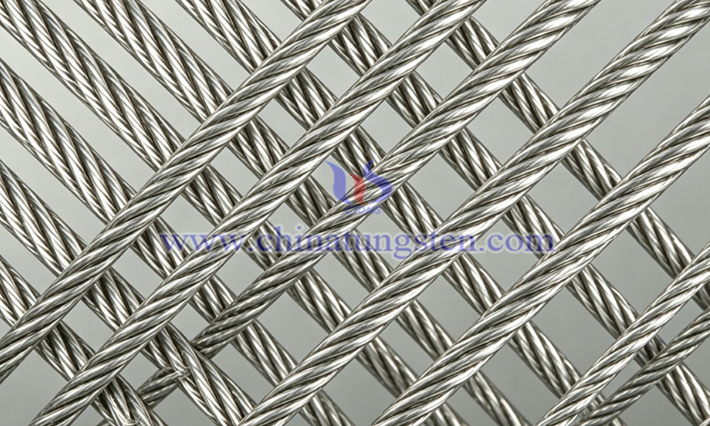
1. Multi-stage or graded constant load pre-stretching
The purpose is to eliminate the structural stress introduced by braiding, ensuring that the strands are tightly bonded and the stress is evenly distributed. 1. **Graded Pre-stretching:** On specialized stretching equipment, a graded, incremental load is applied to the finished tendon rope, typically 30%-60% of its breaking strength, adjusted according to specifications. Through multiple cycles of loading and unloading, the rope structure is gradually stabilized. This graded method is more uniform than single pre-stretching, avoiding localized overload or damage, and significantly improving the straightness and roundness of the rope.
2. **Vacuum Stabilization Heat Treatment for Shaping:** The purpose is to eliminate residual stress within the metal lattice, achieving long-term dimensional stability and effectively controlling creep. The pre-stretched tendon rope undergoes precise temperature-controlled heat treatment in a vacuum furnace under hydrogen protection or a high-vacuum environment. The temperature range is typically 800-1100℃, adjusted according to the characteristics of the doped tungsten wire. After holding at this temperature for a certain time, it is slowly cooled. The vacuum environment prevents oxidation and optimizes the grain structure, resulting in a much higher internal stress relief rate than a simple pre-stretching process.
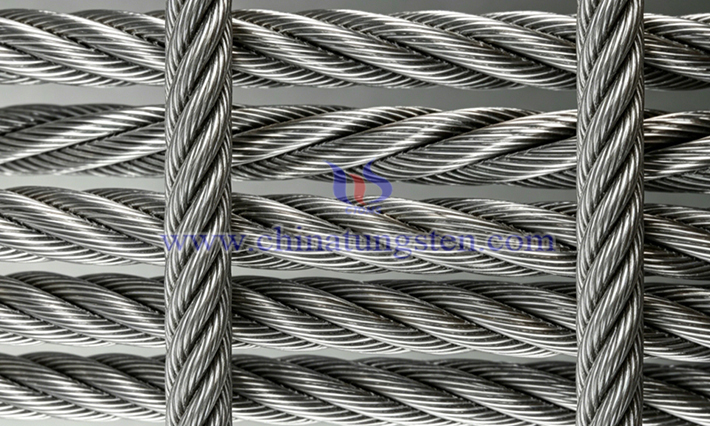
3. Overview of the Tungsten Wire Tendon Cord Pre-stretching and Shaping Process
Ultra-fine tungsten wire drawing → Precision weaving (closed-loop tension control) → Multi-stage pre-stretching → Vacuum stabilization heat treatment → Inspection (tensile, cyclic fatigue, metallographic, creep testing) → Winding/packaging.