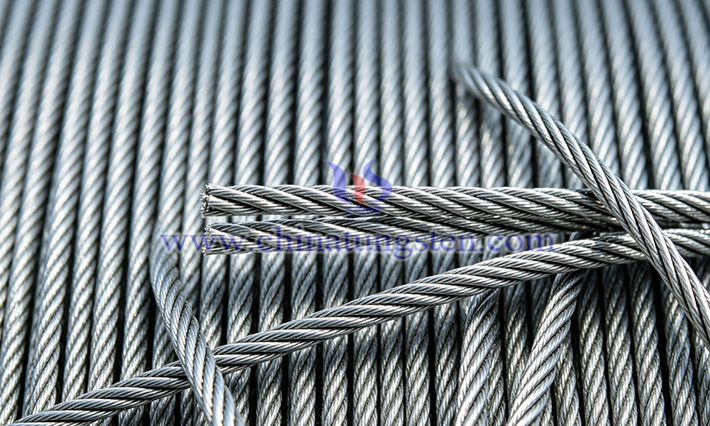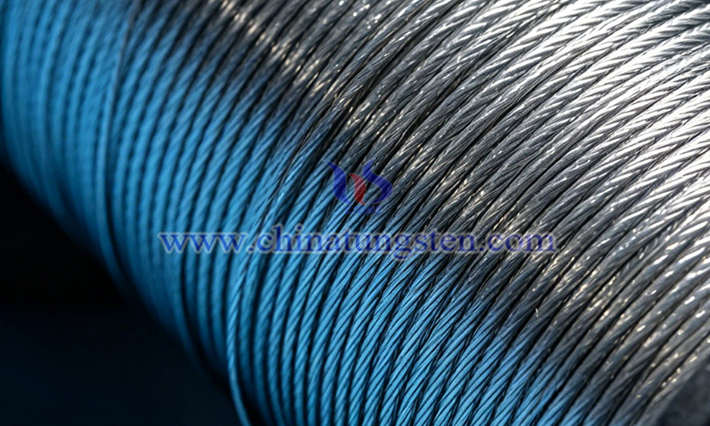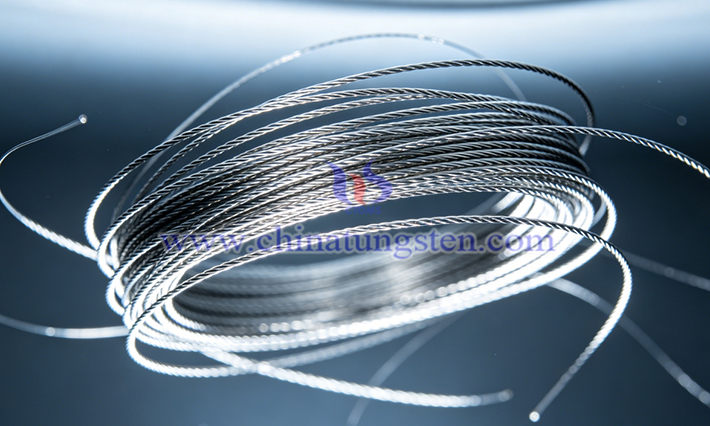
CTIA GROUP's tungsten wire tendon rope exhibits exceptional thermal stability, making it a reliable high-performance transmission and load-bearing component in high-temperature and high-stress environments. Its thermal stability originates from the extreme physical properties of tungsten metal and its carefully designed stranded structure, leading to its significant applications in several cutting-edge fields.
I. The Source and Advantages of the Thermal Stability of Tungsten Wire Tendon Rope
(1) The Excellent Properties of Tungsten
Tungsten has a melting point of approximately 3420℃, making it resistant to softening or melting at extreme temperatures, a fundamental guarantee of its high-temperature resistance. This high melting point endows it with excellent high-temperature strength; even in environments above 1000℃, tungsten wire maintains high tensile strength and hardness; at approximately 2500℃, it can withstand significant mechanical stress without breaking. Furthermore, the high melting point and stable crystal structure of tungsten wire result in extremely low creep rates at high temperatures, effectively ensuring dimensional stability and transmission accuracy during long-term use.
(2) Enhanced Efficiency Through Stranded Design
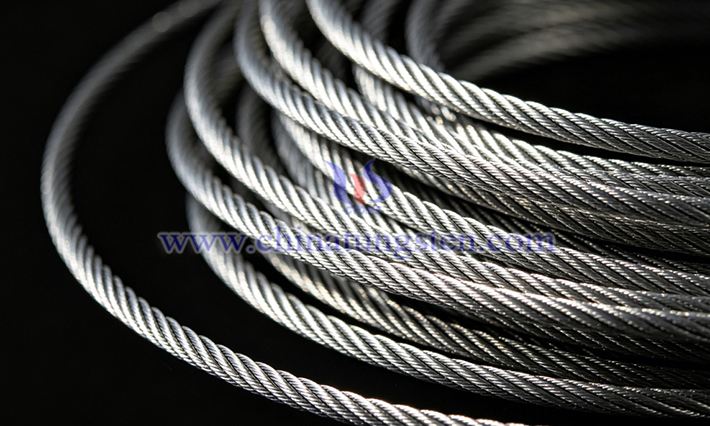
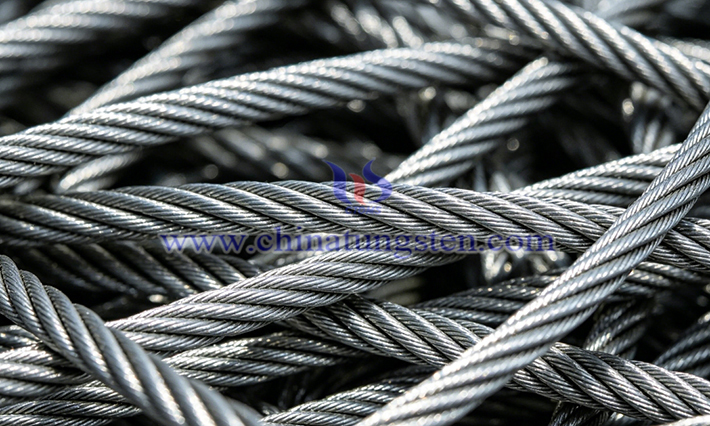
The stranding of multiple ultra-fine tungsten wires gives the tendon rope better flexibility on a macroscopic scale than a single wire, allowing it to adapt to smaller bending radii and meet flexible transmission requirements. The stranded structure disperses external forces across multiple strands, significantly improving overall fracture resistance and reliability. The inter-strand contact interface forms a certain degree of frictional damping at high temperatures, buffering vibrations and thermal shocks.
(3) Optimized Operating Environment
High-temperature oxidation is a major drawback of tungsten materials. Its temperature tolerance decreases significantly in oxygen-containing atmospheres, thus its applications are typically limited to vacuum, inert gas, or reducing atmospheres. In a vacuum or inert atmosphere, tungsten wire ropes can withstand operating temperatures from 1500℃ to 2400℃ for extended periods.
II. Main Application Scenarios of Tungsten Wire Tendons
(1) Humanoid Robots: As tendons for dexterous hands, providing high-temperature resistant, reliable, and precise power transmission.
(2) High-Temperature Vacuum Equipment: Used for suspending or supporting heating elements, crucibles, and other components within high-temperature vacuum furnaces.
(3) Aerospace: Used as high-temperature traction or fixing components, and as structural material for aircraft thermal protection systems.
(4) Semiconductor and Specialty Industries: Used in scenarios requiring both conductivity and high-temperature resistance, or in high-temperature chemical reaction systems.