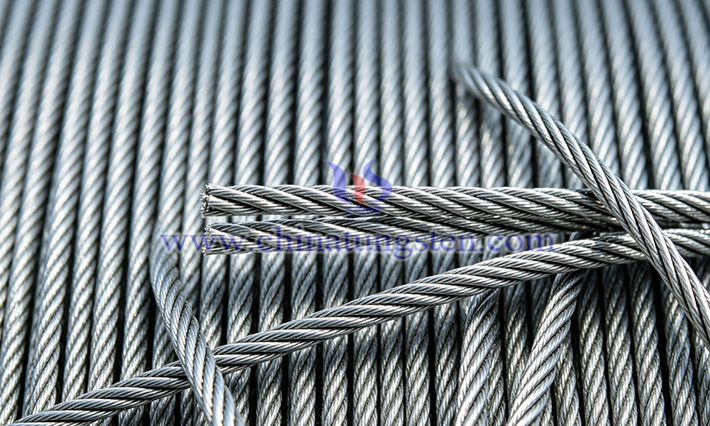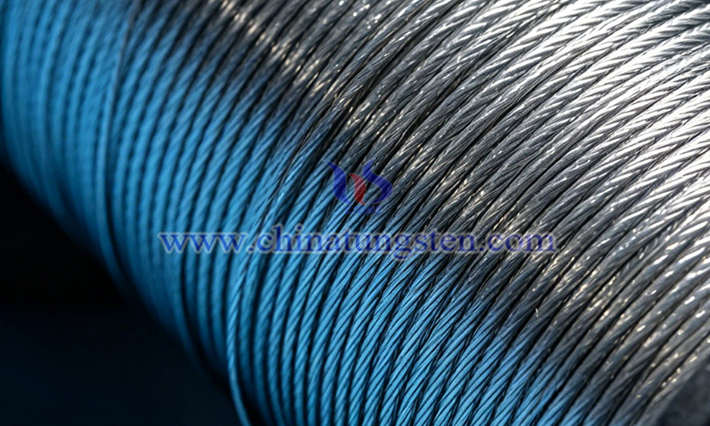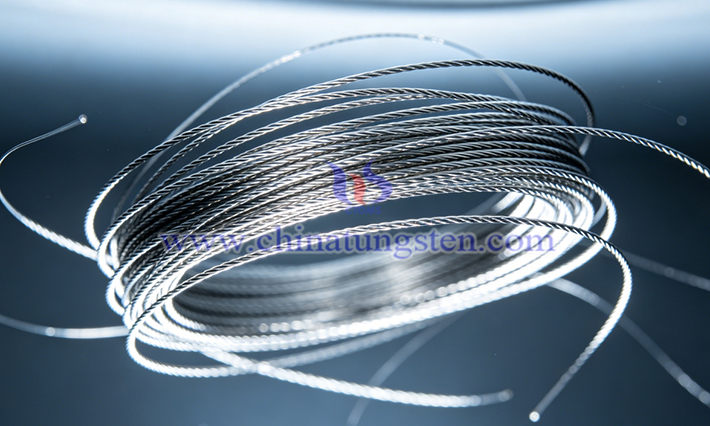
CTIA GROUP's tungsten wire tendon ropes are mainly used in precision transmission systems in industrial robots, particularly in dexterous hands, end effectors, joint drives, surgical robots, and collaborative robots. It mimics human tendons, achieving high-precision, high-repeatability motion control through pulling, meeting the robot's requirements for flexible transmission, compact space, and high-reliability transmission.
1. Why choose tungsten wire tendon ropes?
(1) High strength and wide adaptability: The tensile strength of tungsten wire ropes is significantly better than that of ordinary steel wires, providing sufficient load-bearing capacity even with diameters of 0.3mm or smaller, perfectly adapting to the miniaturization requirements of robots; simultaneously, with diameters of 4mm and larger, even higher tensile strength can be achieved, meeting the transmission requirements of large industrial robotic arms for load-bearing and precise control.
(2) Fatigue Resistance and Creep Resistance: Under repeated bending, folding (small radius pulleys) and long-term load conditions, the residual elongation is extremely low, and the fatigue life can reach millions of cycles without wire breakage. Its creep resistance is significantly better than stainless steel wire rope and some polymer fibers (such as ultra-high molecular weight polyethylene UHMWPE), ensuring dimensional stability and motion accuracy during long-term use.
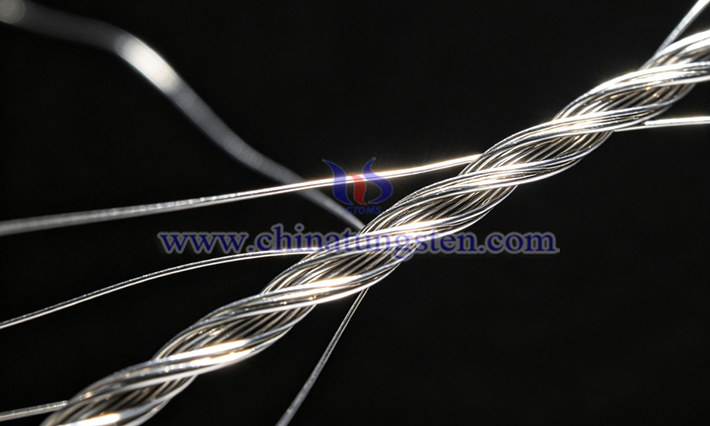
(3) Flexibility and Radiation Shielding: Adopting a multi-strand stranded structure (such as 7×7, 7×19, 7×37, 7×7+8×19, etc.), it has a low coefficient of friction and a small bending radius, making it suitable for micro-pulley systems and complex wiring paths, effectively avoiding interference between ropes. At the same time, its high-density characteristics make it applicable to X-ray shielding scenarios, such as surgical robots and other high-end fields.

2. Application Scenarios of Tungsten Wire Tendon Ropes in Industrial Robots
(1) Assembly Robot Dexterous Hands: Enables multi-degree-of-freedom precision operations, such as complex actions like grasping and assembly.
(2) Collaborative Robot Joints: Provides compliant actuation, ensuring the safety and accuracy of human-machine interaction. (3) Surgical robot: Utilizing its X-ray impermeability and high reliability, it supports precise manipulation in minimally invasive surgery.
(4) Precision positioning mechanism: Used in scenarios requiring high repeatability of positioning and micro-motion control.