Vacuum sintering technology is widely used in the manufacturing fields of cemented carbides, advanced ceramics, powder metallurgy, new energy materials, and refractory metal products. With continuously increasing sintering temperatures and increasingly complex process conditions, key components inside furnaces are exposed to more severe working environments. As important connecting elements in hot-zone structures, fasteners must not only maintain reliable mechanical connections but also ensure high-temperature stability, vacuum cleanliness, and long-term cyclic service performance.
CTIA GROUP and its parent company, CHINATUNGSTEN ONLINE, have been dedicated to the tungsten-molybdenum products industry for nearly 30 years. They specialize in providing flexible, customized global services for tungsten-molybdenum products, designing, manufacturing, and precisely processing various standard specifications, grades, and dimensional precision according to customer requirements, suitable for a wide range of applications. For more information on tungsten alloy, please visit the website: http://www.tungsten-alloy.com/index.htm. If you require tungsten alloy, please contact CTIA GROUP: sales@chinatungsten.com, 0592-5129595.
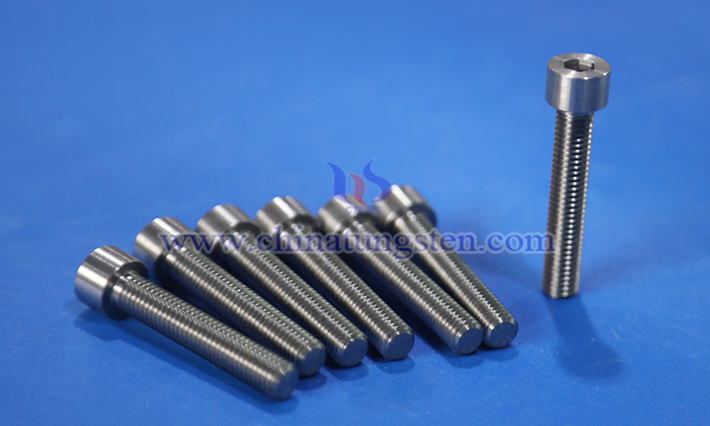
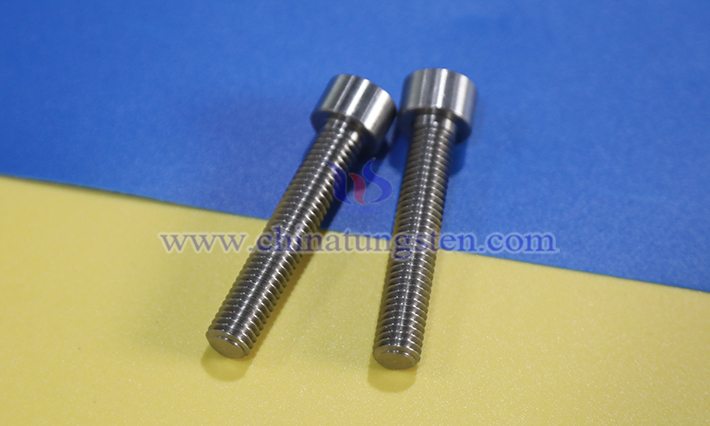
Among many high-temperature materials, tungsten alloy has gradually become an important material choice for fasteners in the hot zone of vacuum sintering furnaces due to its high melting point, high density, low thermal expansion coefficient, and good vacuum adaptability. Tungsten alloy screws produced by CTIA GROUP have been widely used in graphite fixtures, thermal insulation systems, temperature measurement components, and high-temperature support structures.
1.Technical Requirements for Fasteners under Vacuum Sintering Furnace Conditions
Depending on the process, the operating temperature of vacuum sintering furnaces typically ranges from 1200°C to 2400°C. Some advanced equipment must also maintain a high vacuum state for long periods and operate with protective atmospheres such as argon, nitrogen, and hydrogen. Under such conditions, conventional fasteners are prone to issues such as high-temperature softening leading to reduced preload force, thread clearance changes caused by thermal cycling, metal volatilization contaminating sintered products, atmospheric corrosion causing surface damage, and creep deformation after long-term use. Therefore, hot-zone connectors inside the furnace must have higher material stability and environmental adaptability.
The interior of vacuum furnaces widely uses graphite, tungsten plates, molybdenum plates, and silicon carbide components, all of which generally have low thermal expansion coefficients. If the expansion of fasteners is too large, additional stress may be generated during heating and cooling cycles, leading to loosening of connections or structural deformation. Therefore, it is particularly important to select fasteners with thermal expansion properties close to those of hot-zone materials.
2.Tungsten Alloy Screws for Vacuum Sintering Furnaces
Tungsten-nickel-copper alloys produced by CTIA GROUP combine high density and good machinability, and are a commonly used tungsten alloy type in medium-temperature and high-vacuum equipment. The characteristics of tungsten-nickel-copper alloys include high density, non-magnetic properties, low thermal expansion coefficient, and low volatilization in vacuum environments, making them suitable for vacuum furnace systems.
Compared with tungsten-nickel-copper alloys, tungsten-nickel-iron alloys generally have higher strength and toughness. Their characteristics include higher tensile strength, better impact resistance, stronger high-temperature load-bearing capacity, and greater suitability for large fixtures and heavy-load connection structures. In long-term high-temperature sintering equipment operation, tungsten-nickel-iron alloys are often used in connection parts with higher load-bearing requirements.
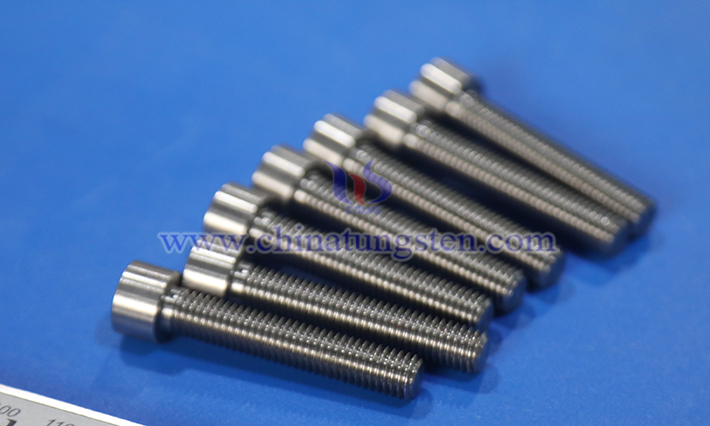
3.Applications of Tungsten Alloy Screws in Vacuum Sintering Furnaces
Graphite fixture fixing systems: graphite trays, boats, and sintering fixtures are the most common hot-zone components inside furnaces. Tungsten alloy screws can achieve good thermal expansion matching with graphite materials, maintaining connection stability during repeated heating and cooling cycles, and reducing the impact of fixture displacement on product quality.
Insulation shield and reflective shield connections: ultra-high-temperature vacuum furnaces usually adopt multilayer tungsten or molybdenum plates to form thermal reflection structures. Using tungsten alloy screws for fastening in these areas can reduce thermal deformation differences between different materials, improve the overall stability of insulation components, and reduce maintenance frequency during long-term operation.
Temperature measurement component installation: high-temperature vacuum furnaces widely use thermocouples or infrared temperature measurement systems to monitor temperature changes. Tungsten alloy fasteners, due to their low vapor pressure and good thermal stability, can be used to secure thermocouple brackets and related measuring accessories, reducing the impact of impurity release on measurement accuracy in high-temperature environments.
Furnace door and inner lining structure connections: the interior of some annealing and sintering furnaces adopts multilayer insulation structures in furnace doors. Tungsten alloy screws can maintain high dimensional stability during long-term thermal cycling, helping to maintain the reliability of sealing structures and reduce the risk of vacuum leakage.