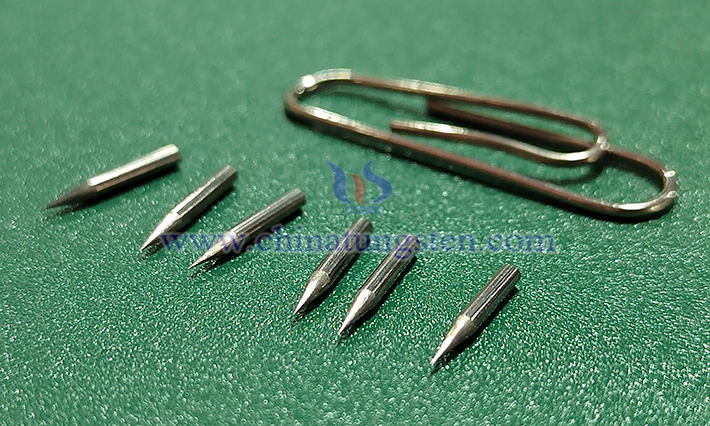
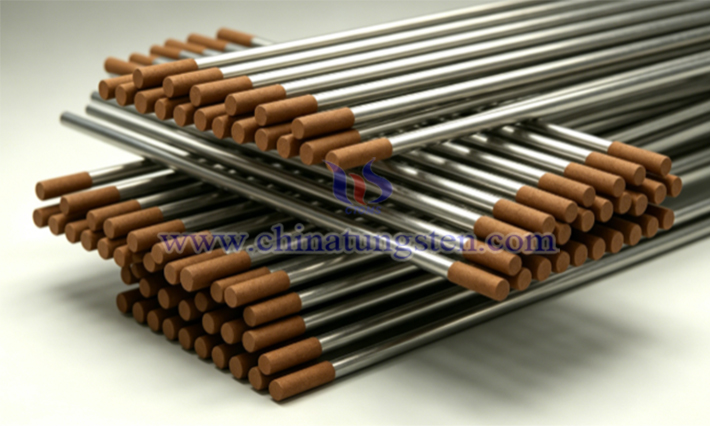
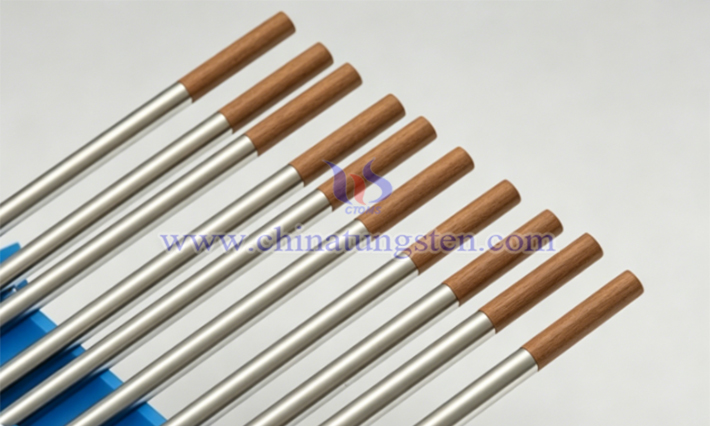
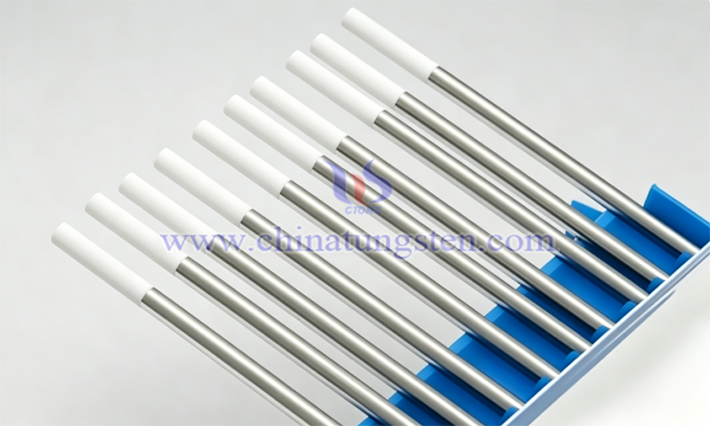
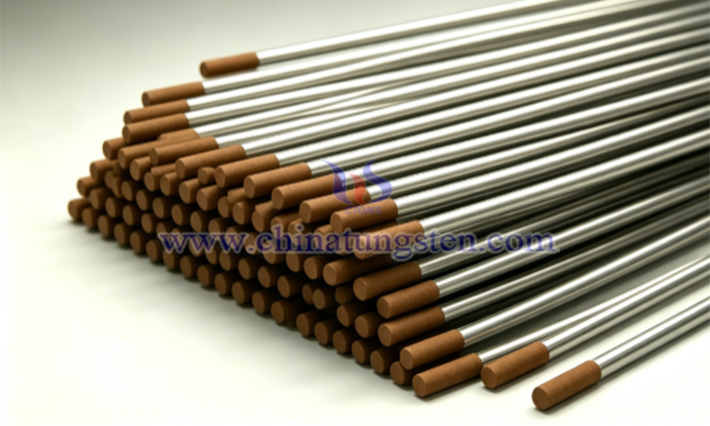
The zirconiated tungsten electrode produced by CTIA GROUP is a functional electrode material made by adding an appropriate amount of zirconium oxide to a high-purity tungsten matrix. It is color-coded as brown (WZ3 with ZrO? content of 0.2%–0.4%) and white (WZ8 with ZrO? content of 0.7%–0.9%). During production, zirconium oxide is evenly distributed in the grain boundaries of tungsten in the form of fine particles. This structure effectively inhibits excessive grain growth of tungsten at high temperatures. Compared with the single-grain structure of pure tungsten, the addition of zirconium oxide makes the internal microstructure of the zirconiated tungsten electrode more uniform. While maintaining the high melting point of tungsten itself, the second-phase particles significantly improve the material’s thermal stability at high temperatures, laying a solid foundation for long-term reliable operation under high-current conditions.
CTIA GROUP and its parent company, CHINATUNGSTEN ONLINE, have been dedicated to the tungsten-molybdenum products industry for nearly 30 years. They specialize in providing flexible, customized global services for tungsten-molybdenum products, designing, manufacturing, and precisely processing various standard specifications, grades, and dimensional precision according to customer requirements, suitable for a wide range of applications. For more information on tungsten electrodes, please visit the website: http://www.tungsten.com.cn/tungsten-electrodes.html. If you require tungsten electrodes, please contact CTIA GROUP: sales@chinatungsten.com, 0592-5129595.
I. Properties of zirconiated tungsten electrodes
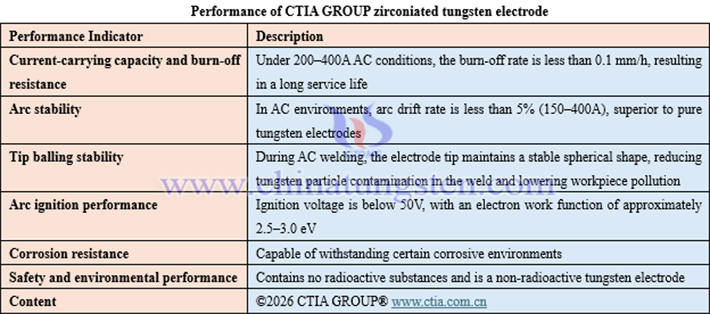
The performance advantages of CTIA GROUP’s zirconiated tungsten electrodes are mainly reflected in current-carrying capacity and burn-off resistance, enabling higher current-carrying performance and longer service life under high-current AC welding conditions. By improving arc stability, tip balling behavior, and arc ignition performance, zirconiated tungsten electrodes are well suited for welding light metals such as aluminum alloys. These characteristics collectively ensure welding stability and quality while also meeting requirements for corrosion resistance, safety, and environmental protection, making them an ideal alternative to thoriated tungsten electrodes.
II. Production process of zirconiated tungsten electrodes
The production of CTIA GROUP’s zirconiated tungsten electrodes involves five key steps: powder mixing, pressing and forming, high-temperature sintering, rotary forging and drawing, and tip processing. First, tungsten powder and zirconium oxide powder are fully mixed under an inert gas atmosphere to prevent impurity contamination. Then, a dense compact is formed through cold isostatic pressing, followed by high-temperature hydrogen sintering, allowing tungsten grains and zirconium oxide particles to form a stable bond. After that, multiple rotary forging processes are applied to increase material density, and the material is finally drawn into electrode rods of different diameters. In the tip processing stage, specific geometries such as flat tip or truncated cone are produced according to application requirements. For example, flat tips are commonly used in AC welding of aluminum alloys, as they help stabilize the cathodic arc spot.
III. Application scenarios of zirconiated tungsten electrodes
The primary application field of CTIA GROUP’s zirconiated tungsten electrodes is welding of aluminum and aluminum alloys. In the construction industry, aluminum alloy doors, windows, and guardrails are commonly welded using zirconiated tungsten electrodes to ensure sufficient wind pressure resistance and weather resistance at the joints. In the transportation sector, large structural components such as automotive aluminum alloy body structures, railway vehicle underframes, and body panels are welded using stable arcs generated by zirconiated tungsten electrodes, improving vehicle safety and service life. In the aerospace industry, welding tasks for aircraft fuselage skins and aluminum alloy structural components are highly demanding. Thanks to their high current-carrying capacity and low burn-off rate under high-current AC conditions, zirconiated tungsten electrodes can operate stably for long periods, effectively control the heat-affected zone, and ensure the mechanical properties and fatigue life of welds.
Zirconiated tungsten electrodes are also preferred electrode materials for welding magnesium alloys, particularly in aerospace lightweight structural components where high weld quality is required. By providing sufficient cathodic cleaning action in AC welding, they effectively remove oxide films from magnesium alloy surfaces and generate a stable and concentrated arc, ensuring uniform weld formation and excellent mechanical properties. This significantly reduces welding defect rates and provides reliable process support for manufacturing high-strength aircraft engine blades, landing gear components, and automotive chassis parts.
In high-quality radiographic welding applications, zirconiated tungsten electrodes are widely used due to their extremely low tungsten contamination under high load currents, making them a key material for stringent inspection requirements. In fields such as pressure vessels, nuclear industry critical components, and chemical equipment where weld quality and cleanliness are essential, zirconiated tungsten electrodes effectively prevent impurity contamination caused by arc processes, thereby improving the purity of weld microstructures. This low-contamination characteristic is well suited for non-destructive testing methods such as X-ray inspection and provides strong assurance for long-term safe operation of equipment.
In addition, zirconiated tungsten electrodes can also be used for AC welding of carbon steel, stainless steel, and copper and its alloys. In the welding of these materials, their thermal shock resistance and arc stability continue to provide significant advantages.
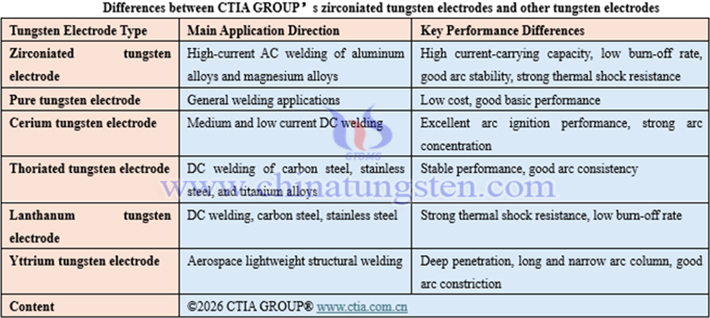
IV. Differences between zirconiated tungsten electrodes and other tungsten-based electrodes
Among various types of tungsten electrodes, zirconiated tungsten electrodes stand out due to their high current-carrying capacity, excellent arc stability, low burn-off rate, and good thermal shock resistance, making them particularly advantageous in AC welding applications. Compared with pure tungsten electrodes, they offer higher resistance to high current loads. Compared with cerium, thorium, and lanthanum tungsten electrodes used mainly for DC welding, they are more suitable for high-current AC welding of metals such as aluminum and magnesium alloys, delivering more stable welding performance.
V. Precautions for the use of zirconiated tungsten electrodes
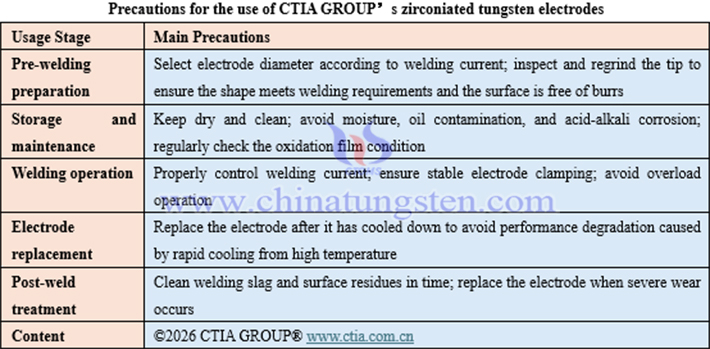
The performance of CTIA GROUP’s zirconiated tungsten electrodes depends not only on the material itself but also on the methods of use and maintenance. In practical applications, the electrode specifications should be selected appropriately according to the welding current, and the tip geometry should meet the requirements of the welding process. Proper storage, maintenance, and regular inspection should be carried out to prevent moisture absorption, oxidation, or wear from affecting arc stability. For replaced electrodes, they should also be handled in accordance with standard procedures to minimize performance degradation and welding defects.