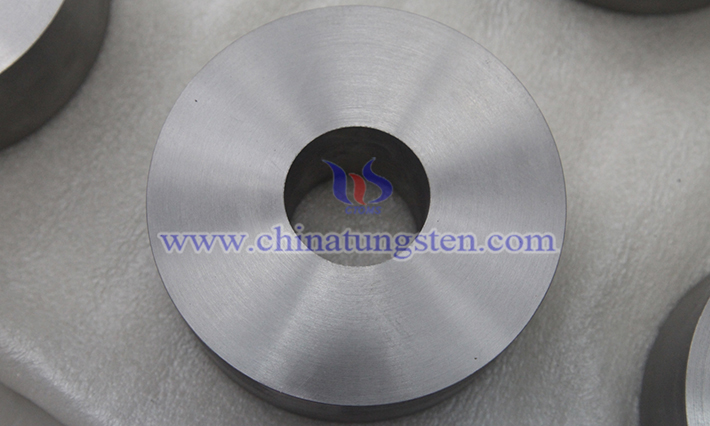
Conductive tungsten alloy rings are not single-component materials, but rather a series of alloy systems formed by adjusting the tungsten content and the type of binder metal to meet the differentiated requirements for conductivity, magnetism, strength, and heat resistance in different application scenarios. Currently, the more mature types in industry mainly include tungsten-nickel-copper (WNiCu) alloy rings, tungsten-silver (WAg) alloy rings, tungsten-copper (WCu) alloy rings, and tungsten-nickel-iron (WNiFe) alloy rings.
I. Tungsten-Nickel-Copper Alloy Rings (WNiCu)
Tungsten-nickel-copper alloy rings use tungsten as the matrix, with nickel and copper as the main binder phases. The addition of copper significantly improves the alloy's electrical and thermal conductivity, achieving a conductivity of 13%~17% IACS (International Annealed Copper Standard), making it the most outstanding in terms of conductivity among conventional high-density tungsten alloys. Meanwhile, because this system contains no iron, the tungsten-nickel-copper alloy ring exhibits non-magnetic properties, giving it a unique advantage in equipment highly sensitive to magnetic field interference.
In terms of performance, the density of tungsten-nickel-copper alloy rings is typically 17.0~18.5 g/cm3, with a tensile strength of 700~1200 MPa and an elongation of approximately 5%~15%. Its combination of non-magnetic, high conductivity, and high density makes it an ideal choice for collimation rings in medical magnetic resonance imaging (MRI) equipment, retaining rings for magnetic levitation bearings, counterweight rings for precision gyroscopes, and electrical contacts in high-voltage electrical switches. Furthermore, this material is less prone to corrosion in humid environments, exhibiting superior corrosion resistance compared to iron-containing systems.
II. Tungsten-Silver Alloy Rings (WAg)
Tungsten-silver alloy rings use tungsten as the framework and silver as the conductive phase. The silver content is typically between 30% and 70%, corresponding to a density range of approximately 11.7~16.1 g/cm3. The addition of silver makes its electrical conductivity the best among high-density tungsten alloys, reaching over 45% IACS, and its thermal conductivity is also significantly higher than other types.
Tungsten-silver alloy rings combine the high hardness, arc erosion resistance, and weld resistance of tungsten with the excellent electrical and thermal conductivity and low contact resistance of silver. Its tensile strength is generally 600~1000MPa, with a relatively low elongation (approximately 2%~8%), but sufficient to meet the mechanical requirements of electrical contact components. This material is mainly used for contact rings and contact plates in high-current, frequently switching high-voltage switches and relays, as well as electrode rings in electrical discharge machining (EDM). Due to the high cost of silver, tungsten-silver alloy rings are typically used only in applications with extremely high requirements for conductivity and arc resistance.
III. Tungsten-Copper Alloy Rings (WCu)
Tungsten-copper alloy rings use tungsten as the matrix and copper as the conductive phase. The tungsten content is typically between 50% and 90%, corresponding to a density of approximately 12.0~17.0 g/cm3. Unlike heavy-duty tungsten alloys that prioritize maximum density, tungsten-copper alloy rings focus on balancing functionality with electrical and thermal conductivity. Their conductivity can be adjusted by the copper content, typically varying within the range of 20% to 45% IACS.
Tungsten-copper alloy rings exhibit excellent resistance to arc erosion and thermal management capabilities. Their coefficient of thermal expansion can be adjusted to match materials such as silicon chips and ceramic substrates, making them widely used in high-power electronic packaging. Typical applications include protective rings for high-voltage switches, arc shielding rings in vacuum contactors, resistance welding electrode rings, and heat dissipation substrate rings for IGBT modules. While tungsten-copper alloy rings have relatively low mechanical strength (tensile strength approximately 500–900 MPa, elongation generally less than 10%), their high-temperature resistance and resistance to welding are sufficient to meet the requirements of these operating conditions.
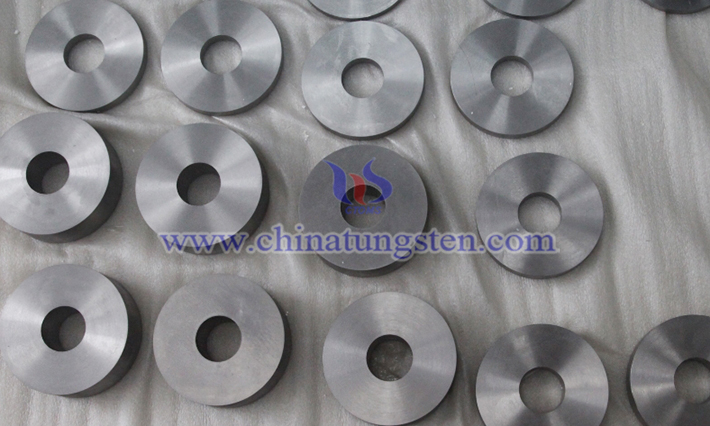
IV. Tungsten-Ni-Fe Alloy Rings (WNiFe)
Tungsten-Ni-Fe alloy rings use tungsten as the matrix, with nickel and iron as the binder phases. The addition of iron slightly reduces the electrical conductivity of the alloy, typically around 10%–14% IACS, but it also brings higher strength and better toughness. This system exhibits weak magnetism, a key difference from tungsten-nickel-copper alloys in terms of magnetic properties.
Tungsten-nickel-iron alloy rings have a density of 17.5–18.8 g/cm3, making them a common high-density type among high-density tungsten alloys. Their tensile strength reaches 800–1500 MPa, and their elongation reaches 8%–25%, demonstrating excellent overall mechanical properties. Their weak magnetism allows them to function in some electromagnetic shielding components (such as shielding rings in avionics equipment), but long-term storage in humid environments requires rust prevention treatment. Furthermore, tungsten-nickel-iron alloy rings are widely used in rotating counterweight rings requiring high inertial mass, gyroscope rings in inertial navigation systems, and counterweights and support rings in oil drilling measurement instruments.
CTIA GROUP and its parent company, Chinatungsten Online, leverage 30 years of professional flexible customization experience to customize high-performance tungsten alloy products according to customer needs, covering a wide range of applications including radiation shielding, industrial sealing, precision instruments, aerospace, medical devices, defense, oil drilling, automotive manufacturing, electronic packaging, high-temperature furnaces, and nuclear protection. CTIA GROUP's tungsten alloy product website is www.tungsten-alloy.com, email is sales@chinatungsten.com, and phone is +86 592 5129595.