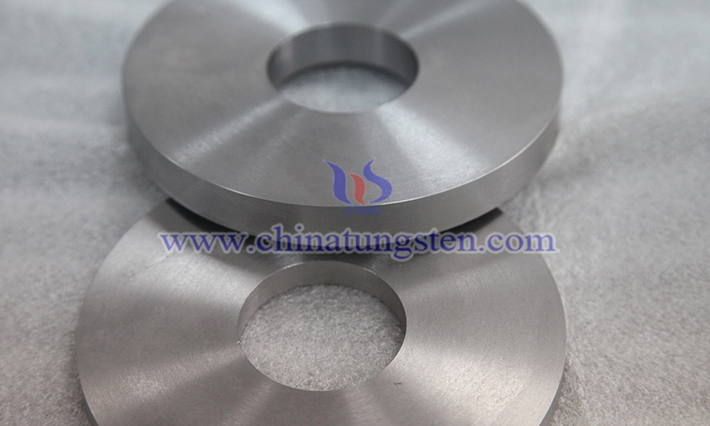
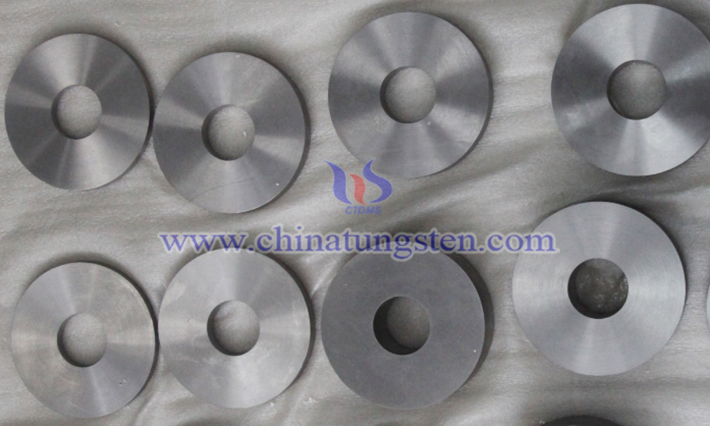
A thermally conductive tungsten alloy ring is a ring-shaped metal component with highly efficient thermal conductivity achieved through optimized alloy composition within a high-density tungsten matrix. It belongs to the functionalized branch of high-density tungsten alloys, typically using tungsten as the matrix (85% to 98%) and adding metals such as nickel-iron, nickel-copper, copper, or silver as binder phases. These binder metals form continuous thermally conductive pathways within the alloy, allowing the material to maintain the high density and high strength characteristics of tungsten alloys while achieving reliable thermal conductivity.
1. Performance of Thermally Conductive Tungsten Alloy Rings
The thermal conductivity of thermally conductive tungsten alloy rings at room temperature typically ranges from 50 to 120 W/m·K. Different types of tungsten alloys exhibit variations due to differences in the binder phase: Tungsten-nickel-copper alloy (WNiCu), due to its copper content, boasts superior thermal conductivity among conventional tungsten alloys, reaching 80–115 W/m·K, while remaining non-magnetic; Tungsten-nickel-iron alloy (WNiFe) has a thermal conductivity of approximately 70–100 W/m·K, while also possessing higher strength and toughness; Tungsten-copper alloy (WCu), manufactured through a melt infiltration process, can achieve a thermal conductivity exceeding 175 W/m·K, combining the low thermal expansion of tungsten with the excellent thermal conductivity of copper; Tungsten-silver alloy (WAg) exhibits the best thermal and electrical conductivity among all tungsten alloys, but its strength and hardness are relatively lower, and its cost is also higher.
Besides thermal conductivity, another important characteristic of thermally conductive tungsten alloy rings is their coefficient of thermal expansion (CTE). By adjusting the proportions, it can achieve a good match with materials such as silicon chips, alumina, or aluminum nitride ceramics, thereby reducing thermal stress during temperature changes and preventing delamination or cracking.
2. Applications of Thermally Conductive Tungsten Alloy Rings
Protective Rings in Semiconductor Etching Equipment: In silicon wafer plasma etching processes, thermally conductive tungsten alloy rings are used as focusing rings or edge rings. These rings are directly exposed to the high-temperature, highly corrosive plasma environment and must not only withstand chemical corrosion but also rapidly dissipate the heat generated by the process to ensure etching uniformity and dimensional stability of the equipment during long-term operation. Tungsten-nickel-iron or tungsten-nickel-copper alloy rings are commonly used in these applications.
Heat Dissipation Rings in High-Power Electronic Packaging: In high-power semiconductor devices such as IGBT modules and thyristors, tungsten-copper alloy rings are used as heat sink rings or sealing rings. The ring is in close contact with the chip or ceramic substrate, efficiently conducting the heat generated during device operation to the external heat dissipation system. Simultaneously, its coefficient of thermal expansion matches that of the ceramic substrate, effectively preventing solder fatigue or package cracking caused by thermal cycling.
Cooling Rings in the Mold and Die-Casting Industry: In molds for aluminum alloy die casting or plastic molding, thermally conductive tungsten alloy rings are embedded around the mold core as annular cooling inserts. Its high thermal conductivity allows molten metal or plastic to solidify faster, shortening the molding cycle and reducing mold cracking caused by thermal fatigue.
High-Temperature Rotary Sealing Rings: In the rotating shaft seals of equipment such as chemical pumps, compressors, and gas turbines, thermally conductive tungsten alloy rings are used as stationary or rotating rings. Frictional heat is generated when the sealing surfaces rotate at high speeds; the thermal conductivity of the tungsten alloy ring can quickly transfer this heat to the cooling medium, preventing localized overheating and seal failure. Its low coefficient of thermal expansion also helps maintain the stability of the sealing gap under temperature fluctuations.
CTIA GROUP and its parent company, Chinatungsten Online, leverage 30 years of professional flexible customization experience to customize high-performance tungsten alloy products according to customer needs, covering a wide range of applications including radiation shielding, industrial sealing, precision instruments, aerospace, medical devices, defense, oil drilling, automotive manufacturing, electronic packaging, high-temperature furnaces, and nuclear protection. CTIA GROUP's tungsten alloy product website is www.tungsten-alloy.com, email is sales@chinatungsten.com, and phone is +86 592 5129595.