According to their design structure, tungsten alloy gratings produced and designed by CTIA GROUP are mainly divided into parallel-type, multi-leaf-type, grid-shaped, and plate-perforated-type, each with distinct characteristics. Among them, the parallel-type structure is the simplest and has a high light transmission rate, suitable for conventional applications; the multi-leaf-type primarily serves dynamic field control in radiotherapy and is not a traditional anti-scatter grating for imaging; the grid-shaped type, with its two-dimensional cross structure, can effectively suppress multi-directional scattered radiation and is currently the mainstream choice for high-end medical CT and precision industrial inspection; the honeycomb type, characterized by a hexagonal array, has a high open area ratio and structural strength, often used in high-end research and high-energy physics detection; the plate-perforated type has a simple structure but relatively weak performance and is mainly used in collimation scenarios.
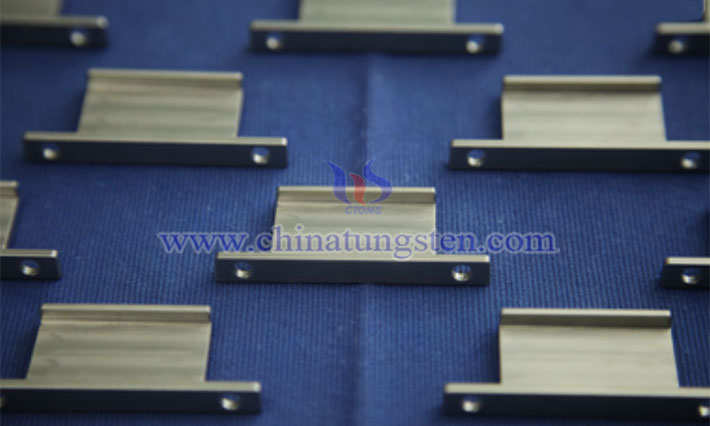
CTIA GROUP’s tungsten alloy grating picture
CTIA GROUP and its parent company, CHINATUNGSTEN ONLINE, have been dedicated to the tungsten-molybdenum products industry for nearly 30 years. They specialize in providing flexible, customized global services for tungsten-molybdenum products, designing, manufacturing, and precisely processing various standard specifications, grades, and dimensional precision according to customer requirements, suitable for a wide range of applications. For more information on tungsten alloy grids, please visit the website: http://www.tungsten-alloy.com/index.htm. If you require tungsten alloy grids, please contact CTIA GROUP: sales@chinatungsten.com, 0592-5129595.
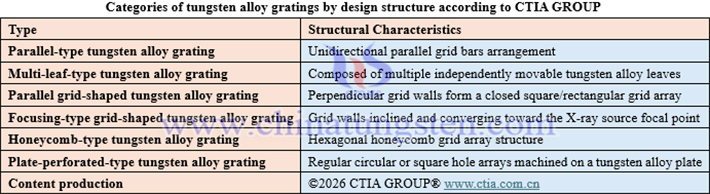
Categories of tungsten alloy gratings by design structure according to CTIA GROUP
1.Parallel-type tungsten alloy grating
CTIA GROUP’s parallel-type tungsten alloy grating is a widely used one-dimensional tungsten alloy grating, also known as slit-type or one-dimensional linear grating. It is composed of a series of high-density tungsten alloy grid bars arranged in parallel, alternated with low-absorption spacing materials, with all slits aligned in the same direction, resulting in a simple and orderly overall structure. The grid bar thickness is generally 0.05–0.15 mm, the grid spacing is 0.1–2.0 mm, and the grid ratio is mostly between 5:1 and 12:1, which can be flexibly customized according to different equipment requirements.
The parallel-type tungsten alloy grating mainly blocks scattered radiation offset in a single dimension. Forward radiation passes through the gaps with relatively high efficiency, and the transmissive proportion is moderate. Due to its structural form, its ability to constrain multi-directional oblique scattered radiation is limited, making it more suitable for environments where radiation scattering is relatively unidirectional. It is commonly paired with conventional industrial inspection, ordinary radiation transmission, and basic imaging auxiliary equipment.
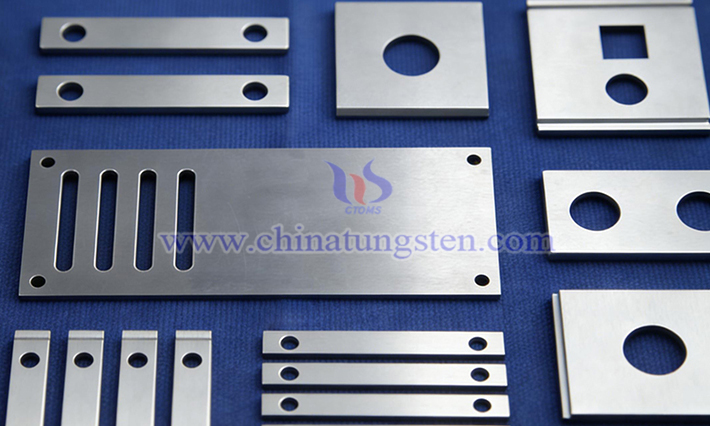
CTIA GROUP’s tungsten alloy grating picture
2.Multi-leaf-type tungsten alloy grating
CTIA GROUP’s multi-leaf-type tungsten alloy grating is a modular adjustable structure grating composed of multiple independent tungsten alloy leaves arranged in a predetermined order. A typical configuration has 28 leaves on each side, totaling 56 leaves, with each leaf independently controlled via a lead screw connected to a micro motor. The gaps between leaves can vary in width, and the overall layout is flexible. This component, made of tungsten alloy, has excellent physical and chemical properties and radiation shielding capability. Leaf thickness is usually 50–100 μm, individual processing technology is mature, and assembly is simple, adapting to various installation conditions.
The multi-leaf-type tungsten alloy grating can flexibly change the size and range of radiation passage by adjusting the leaf opening angle and spacing. The array period can be finely controlled to the hundred-micrometer level, with an aspect ratio generally between 10:1 and 30:1, suitable for various radiation transmission control requirements. During use, it can flexibly adjust the radiation field and manage scattered radiation of different magnitudes, covering a wide range of scenarios. Due to its modular structure, leaf spacing may undergo slight changes under long-term repetitive adjustment, requiring periodic position calibration. It is mainly used in radiation equipment where output range needs flexible adjustment.
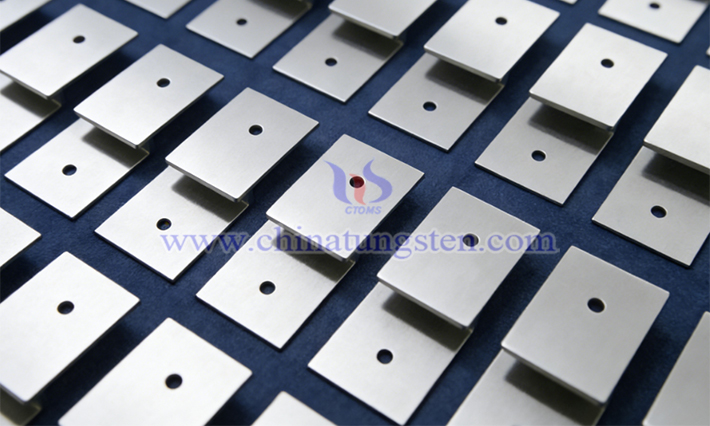
CTIA GROUP’s tungsten alloy grating picture
3.Parallel grid-shaped tungsten alloy grating
CTIA GROUP’s parallel grid-shaped tungsten alloy grating is a radiation control device with a periodic and orderly opening structure, forming a closed square/rectangular grid array with perpendicular grid walls. It is commonly applied in high-end CT, precision DR, industrial inspection, and high-energy physics beam collimation systems. The grating is based on tungsten alloy, forming uniform grid channels aligned in the same direction. The parallel arrangement structure reduces interference from scattered radiation and optimizes imaging signal performance. By varying the grid period and open area ratio, it can accommodate control requirements for photons of different energy levels.
Tungsten alloy has good radiation shielding performance, providing reasonable attenuation for X-rays and γ-rays. The grid structure also allows beam direction selection and spatial arrangement adjustment while maintaining mechanical performance. However, the parallel grid-shaped tungsten alloy grating is difficult to process, requiring optimized cutting and surface treatment to minimize edge burrs.
4.Focusing-type grid-shaped tungsten alloy grating
CTIA GROUP’s focusing-type grid-shaped tungsten alloy grating is a functional radiation control component, adopting a gradient grid arrangement structure. The internal channels converge orderly from the periphery toward the center, forming a regular cavity layout with guiding characteristics. The grating retains tungsten alloy’s excellent radiation attenuation performance, and its structural layout is reasonably designed, providing good overall stability. It can adapt to various conventional working environments and is commonly used in imaging acquisition and precision detection scenarios requiring radiation convergence.
With its convergent grid channel layout, the focusing-type grating can guide incident radiation gradually toward a designated central area while blocking scattered radiation spreading in space, optimizing the overall radiation distribution. The product can adjust grid gradient angles and cavity apertures to meet radiation convergence requirements in different usage scenarios. Compared with uniformly arranged conventional grid gratings, its structural design is more complex, and the forming process requires precise control of multiple dimensional parameters, making overall manufacturing more demanding.
5.Honeycomb-type tungsten alloy grating
CTIA GROUP’s honeycomb-type tungsten alloy grating is made with a honeycomb arrangement, featuring regular hexagonal internal cavities. Unit cavities are tightly arranged, sharing sidewalls with adjacent cavities, resulting in a uniform and orderly overall structure. This grating has high spatial utilization, balanced radiation passage in all directions, and can smoothly filter scattered radiation across the plane, maintaining uniform and stable radiation propagation.
The hexagonal cavity structure facilitates standardized processing and production, with moderate forming difficulty and good consistency of finished dimensions. Compared with square grid structures, its overall transmissive layout is more rational, reducing local uneven radiation distribution.
6.Plate-perforated-type tungsten alloy grating
The plate-perforated-type tungsten alloy grating is made by machining regular circular or square hole arrays on a tungsten alloy plate. Its core design principle is to use tungsten’s high density (19.3 g/cm3) and periodic perforation structure to form radiation transmission channels, while the non-perforated base material effectively absorbs off-axis scattered radiation. The parallel hole structure significantly suppresses scattered noise while maintaining high transmission of the primary beam, particularly suitable for detection scenarios requiring high signal-to-noise ratio and spatial resolution.
In terms of application, plate-perforated-type tungsten alloy gratings are widely used in front collimators of X-ray imaging systems, anti-scatter grids in industrial CT, and beam-shaping units in laboratory precision detection devices.