CTIA GROUP’s parallel-type tungsten alloy grating for production and design is a periodic radiation modulation component formed by alternately arranging high-density tungsten alloy bars and low-attenuation spacer materials in parallel. It belongs to a basic structural form of gratings. All bars extend in the same direction, the channel cross-section is usually a regular rectangle, and the overall structure has high geometric consistency, making it suitable for collimation and filtering scenarios of parallel or approximately parallel radiation beams.
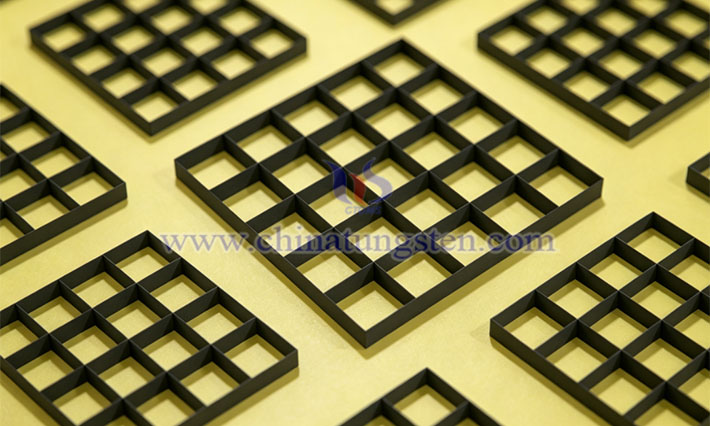
CTIA GROUP’s tungsten alloy grating picture
CTIA GROUP and its parent company, CHINATUNGSTEN ONLINE, have been dedicated to the tungsten-molybdenum products industry for nearly 30 years. They specialize in providing flexible, customized global services for tungsten-molybdenum products, designing, manufacturing, and precisely processing various standard specifications, grades, and dimensional precision according to customer requirements, suitable for a wide range of applications. For more information on tungsten alloy grids, please visit the website: http://www.tungsten-alloy.com/index.htm. If you require tungsten alloy grids, please contact CTIA GROUP: sales@chinatungsten.com, 0592-5129595.
1.Basic structure and geometric parameters of the parallel-type tungsten alloy grating
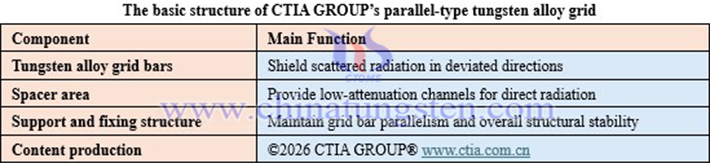
The basic structure of CTIA GROUP’s parallel-type tungsten alloy grid
Tungsten alloy bars are primarily composed of tungsten, with added elements such as nickel, iron, or copper, forming alloy blades or bar-shaped structures, and are designed with a relatively high aspect ratio. Their density is approximately 17.0–18.6?g/cm3. The typical wall thickness ranges around 50–100?μm, while some high-precision products can achieve even thinner walls. The height of the bars is usually set within a range of several millimeters to several tens of millimeters.
The spacer region is located between adjacent tungsten alloy bars. Common materials include aluminum, carbon fiber, or other low-density composites, which have low absorption coefficients for X-rays and similar radiation. The spacer width, also called the channel width, is one of the key geometric dimensions, and together with the bar width, it influences the grating period. The design of the spacer region needs to coordinate with the bar height to achieve the desired performance balance.
The support and fixation part uses low-absorption materials similar to the spacer region or composites with matched thermal expansion coefficients. The bar array and spacer materials are integrated into a whole through bonding, lamination, or precision assembly methods. This structure is used to maintain the parallelism of the bars and the overall flatness, while minimizing additional radiation attenuation and adapting to vibrations and thermal stress in the working environment.
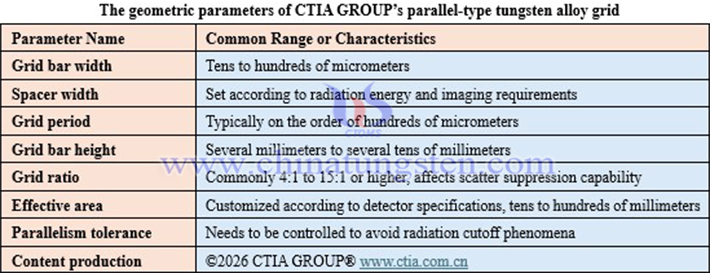
The geometric parameters of CTIA GROUP’s parallel-type tungsten alloy grid
The performance of CTIA GROUP’s parallel-type tungsten alloy grating is determined by a series of structural parameters, mainly including the following: bar width (t), spacer width (D), grating period (t+D), bar height (h), aspect ratio (h/D), and effective area. These parameters are usually optimized and matched through simulation during the design process to accommodate different radiation energies and imaging requirements, while also taking into account wall thickness uniformity, parallelism tolerance, and surface quality.
2.Characteristics of the parallel-type tungsten alloy grating
The density of CTIA GROUP’s parallel-type tungsten alloy grating is approximately 17.0–18.6?g/cm3. Its attenuation effect on X-rays and other high-energy radiation is superior to that of lead alloys, and it can suppress large-angle scattering. Tungsten alloy has high hardness, stable structure, low thermal expansion coefficient, and is heat- and corrosion-resistant, with minimal dimensional changes during long-term use. The unidirectional bar structure balances transmission rate and scattering suppression, and can be adapted to different energy radiations through aspect ratio design. The structure is simple, highly manufacturable, and the bar dimensions and effective area can be adjusted, making it suitable for medical imaging, industrial inspection, and scientific research applications.
3.Working principle of the parallel-type tungsten alloy grating
The working principle of CTIA GROUP’s parallel-type tungsten alloy grating is based on the straight-line propagation of radiation and the high attenuation performance of tungsten alloy. When X-rays are incident, the direct rays propagating along the channel direction can pass through the spacer region to reach the detector; whereas scattered rays with large angles relative to the incident direction are absorbed and blocked by the high-density tungsten alloy bars. This process helps reduce the interference of scattered components on imaging signals, improves image contrast, and keeps the impact on direct rays within a reasonable range.
4.Production method of the parallel-type tungsten alloy grating
The production of parallel-type tungsten alloy gratings mainly uses powder metallurgy combined with precision machining. The process is as follows: tungsten powder is thoroughly mixed with other metal powders (nickel, iron, or copper), then pressed and sintered at high temperature to form a blank. Thin-walled bar structures are then created through precision rolling, wire cutting, EDM (electrical discharge machining), or laser cutting. For high-precision products, femtosecond laser or ultra-precision machining is often used to achieve micron-level dimensional control while ensuring bar parallelism and overall geometric consistency as much as possible. In recent years, some high-end products have also started using 3D printing technology to enhance structural design flexibility and the manufacturability of complex structures.
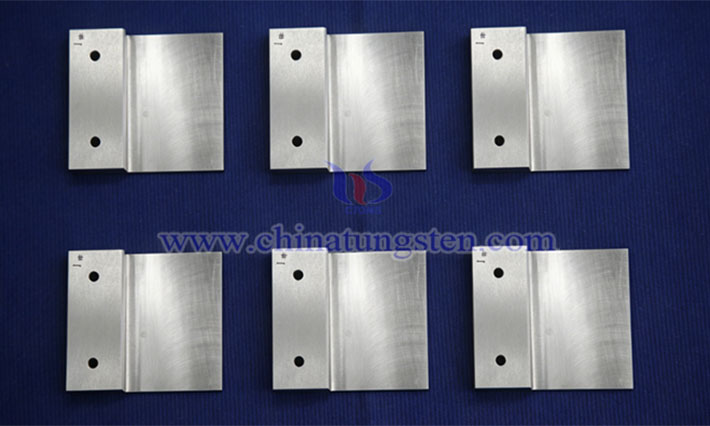
CTIA GROUP’s tungsten alloy grating picture
5.Applications of the parallel-type tungsten alloy grating
In digital radiography, mammography, and CT-related equipment, parallel-type tungsten alloy gratings are often placed in front of detectors to reduce the influence of scattered rays, thereby helping to optimize imaging quality and supporting clinical observation and diagnostic work.
Parallel-type tungsten alloy gratings are applied in industrial X-ray digital imaging (DR) and industrial CT equipment. When inspecting the interior of metal components, composite materials, or electronic parts, they can reduce scattering interference, improve the presentation of defect contours, and provide reference for quality assessment.
In research equipment such as X-ray diffraction analysis and high-energy physics experimental detectors, parallel-type tungsten alloy gratings are used for beam collimation and scatter filtering, helping maintain the stability and reliability of experimental data and meeting the radiation management needs in fundamental research.